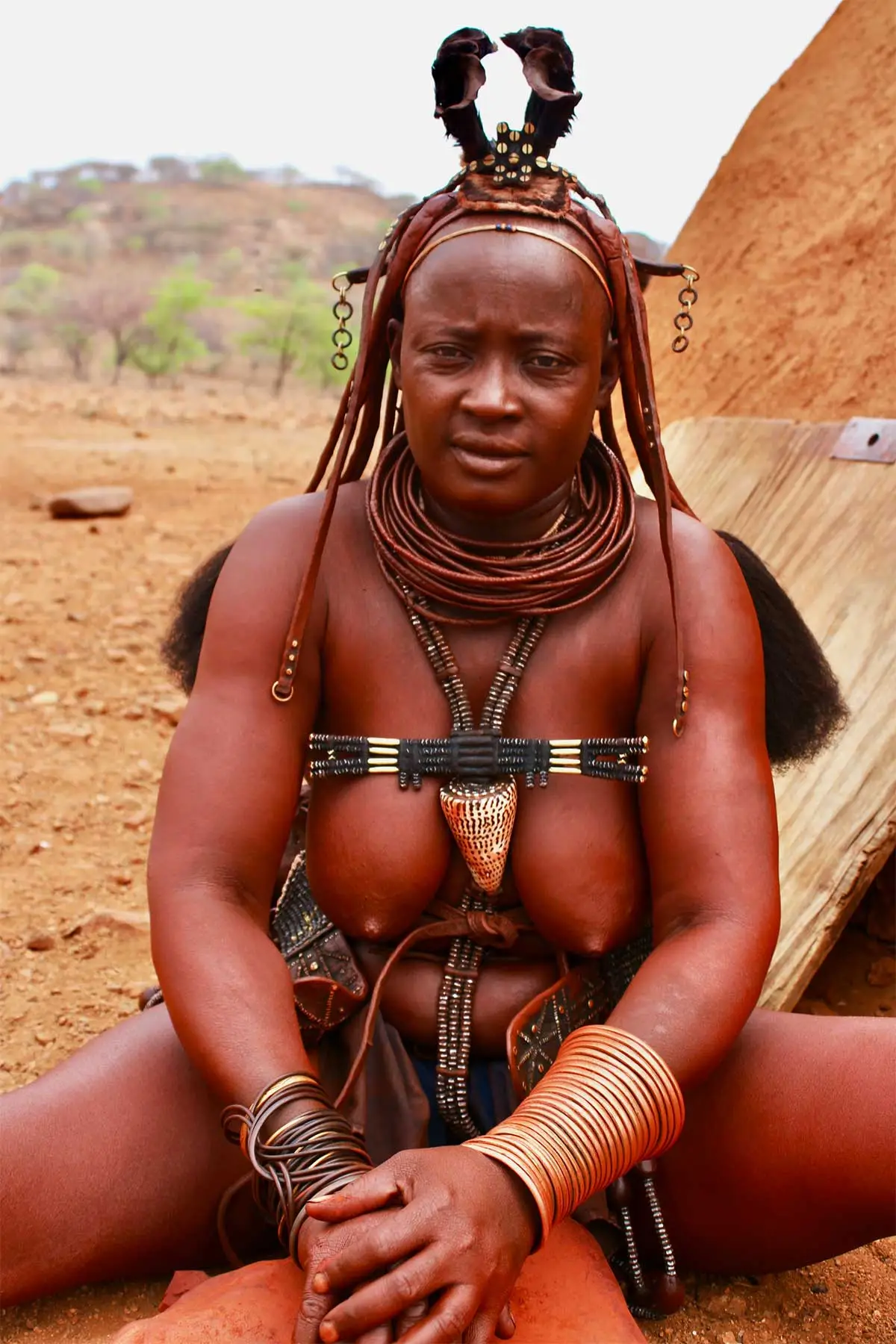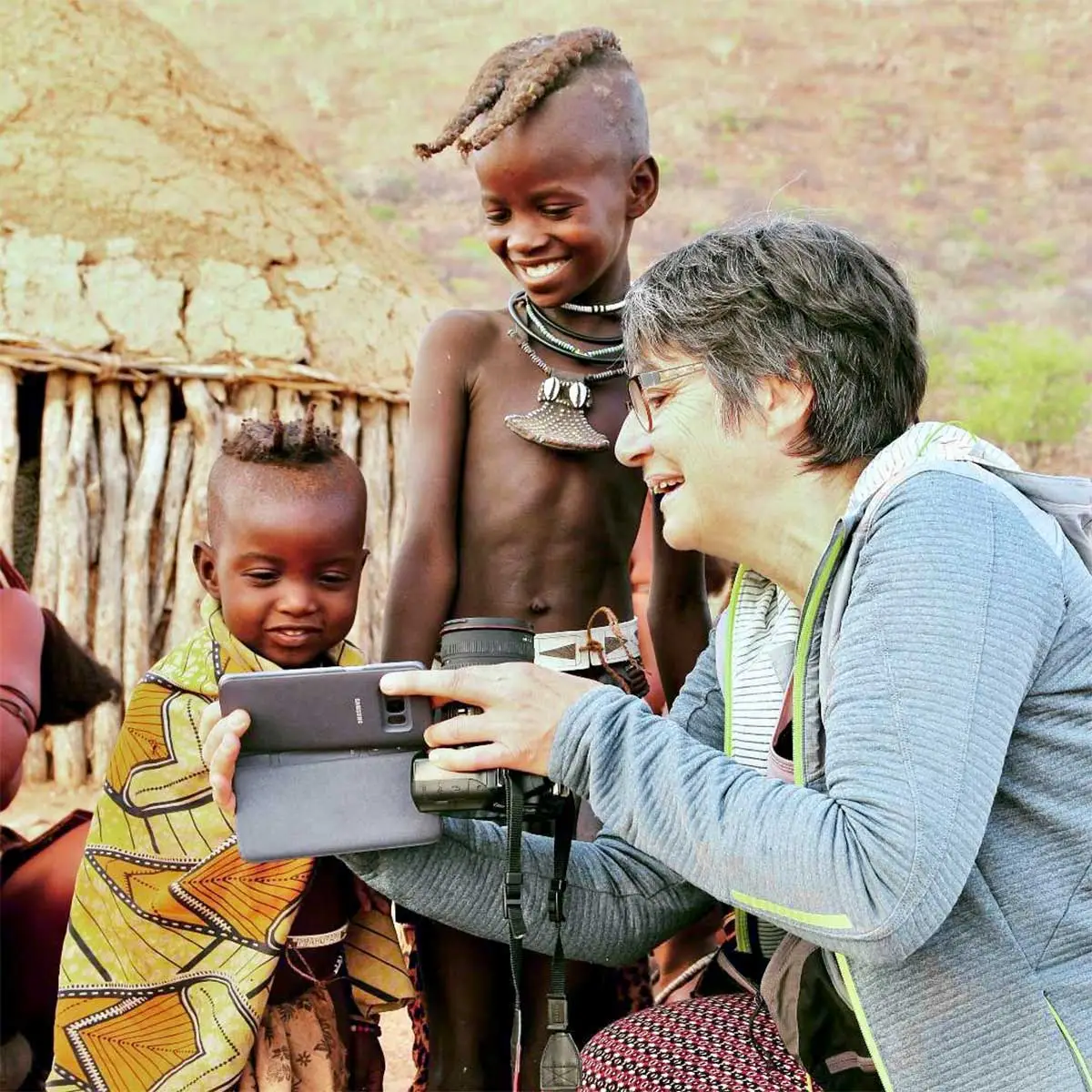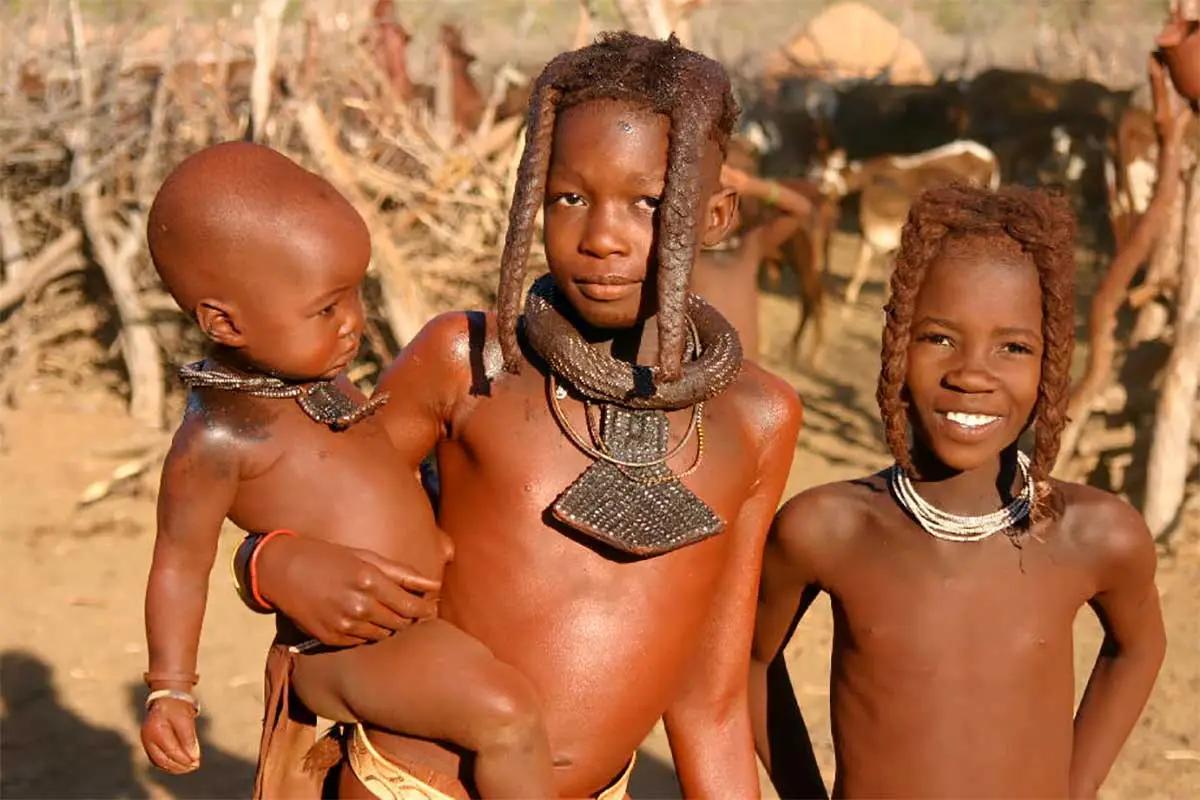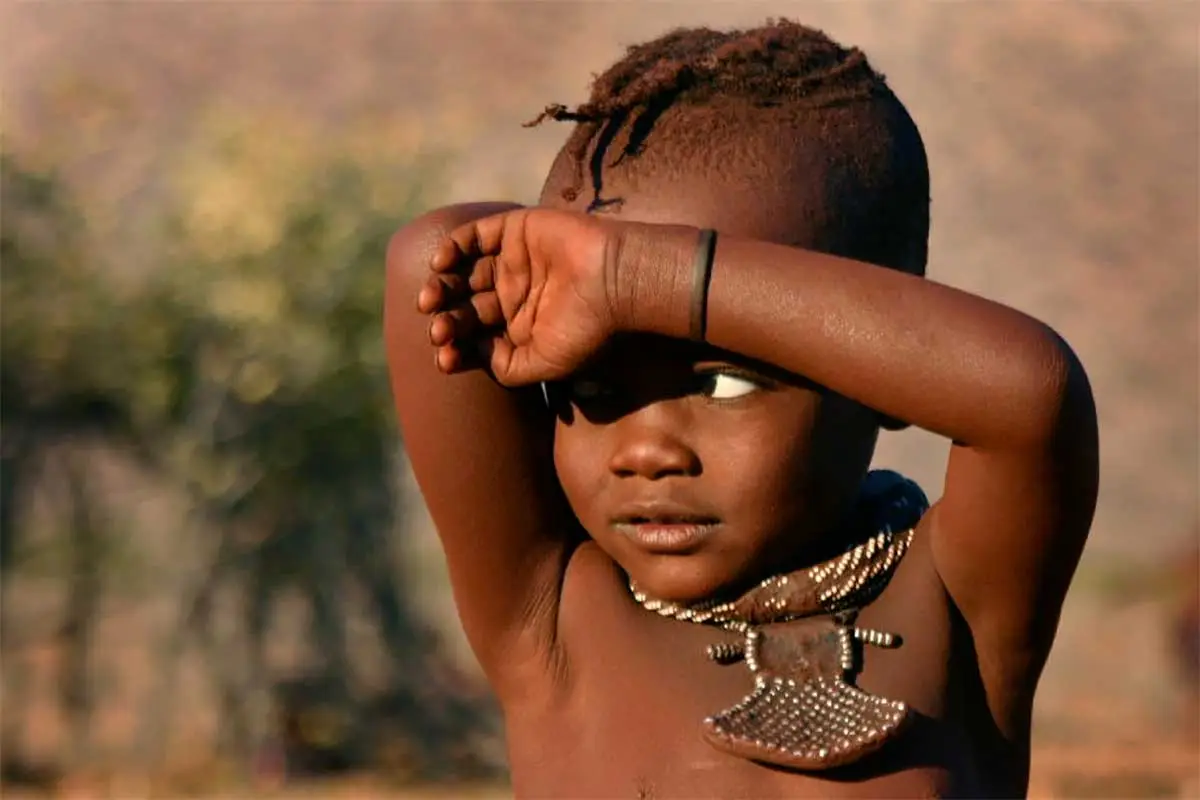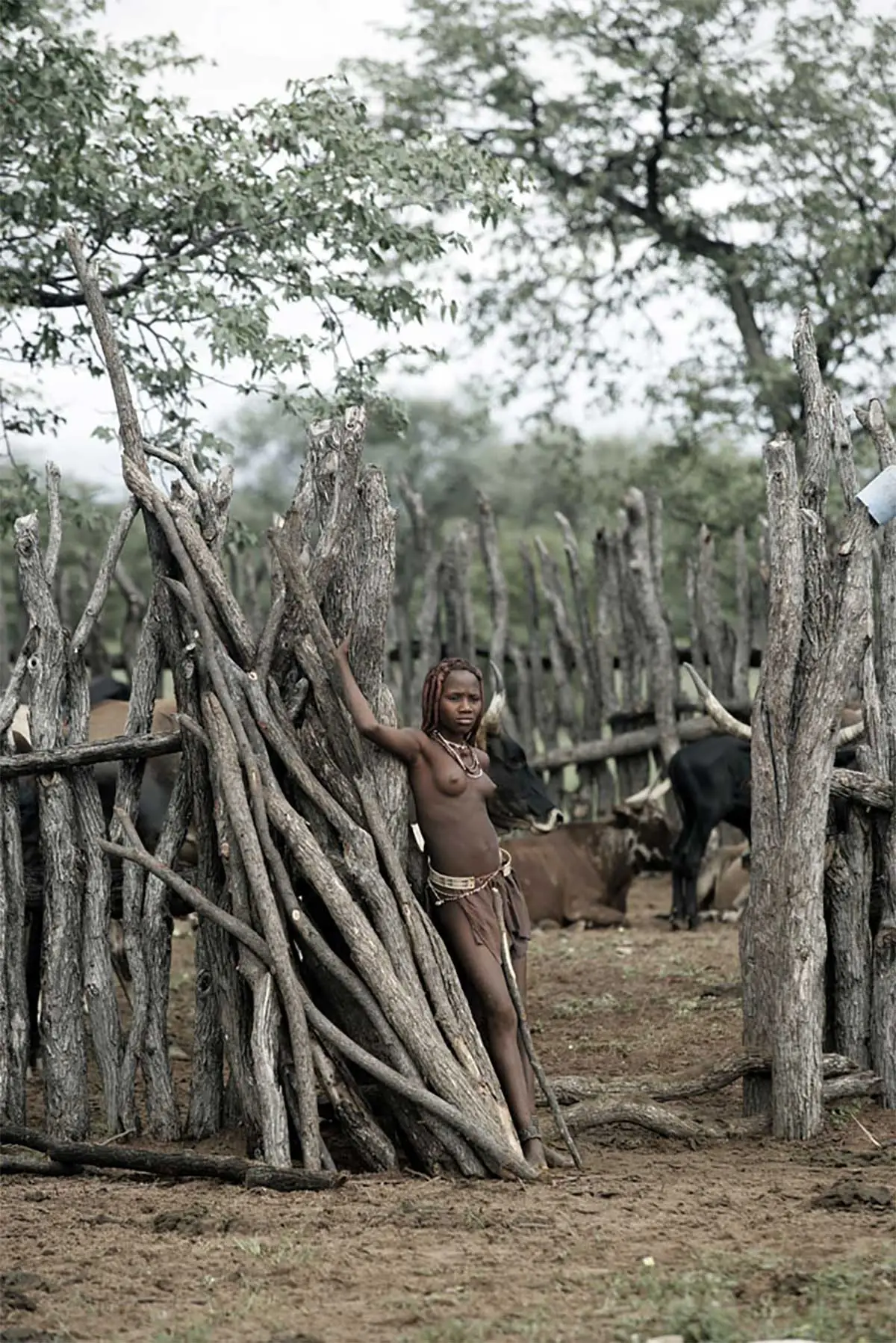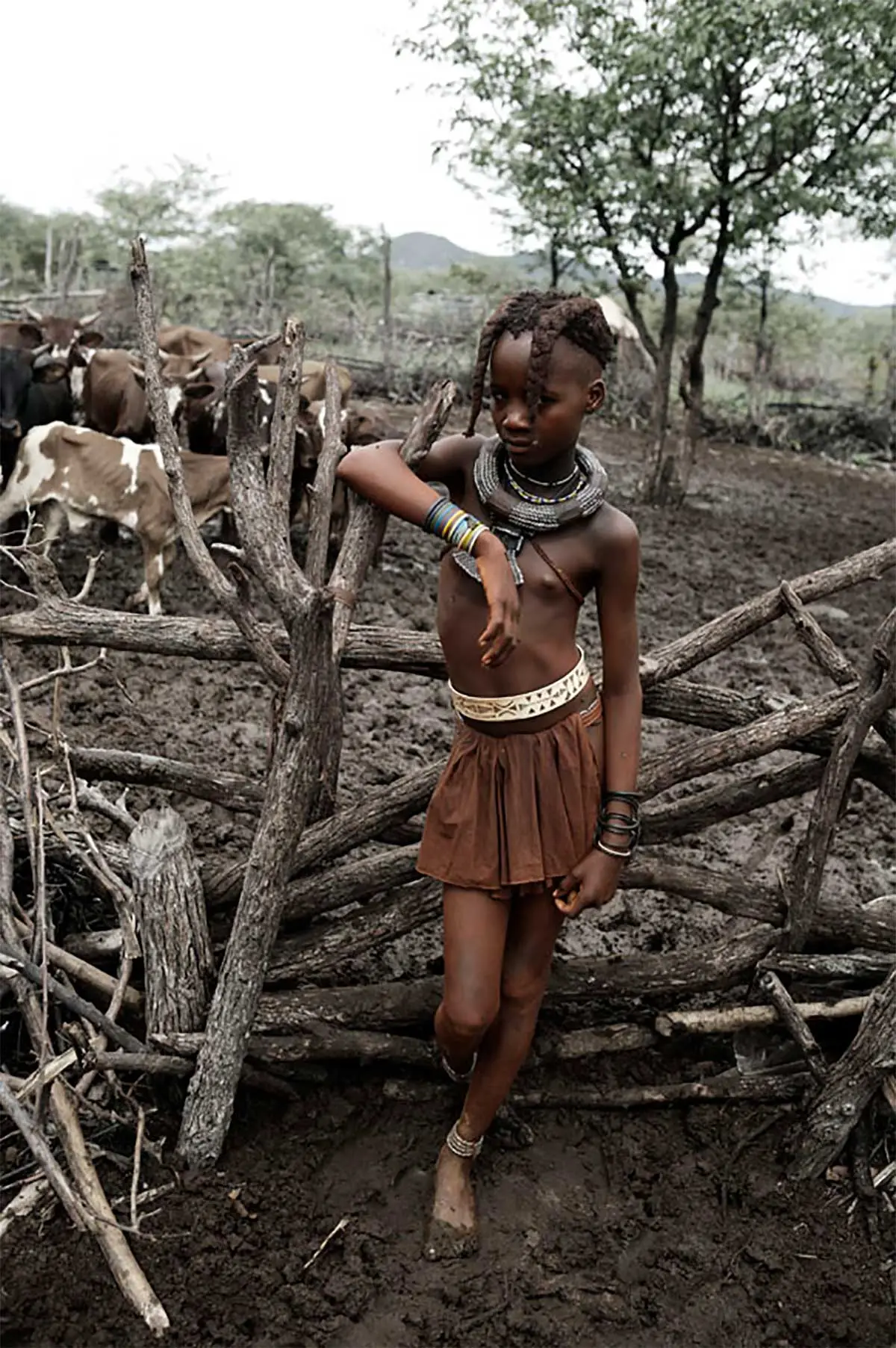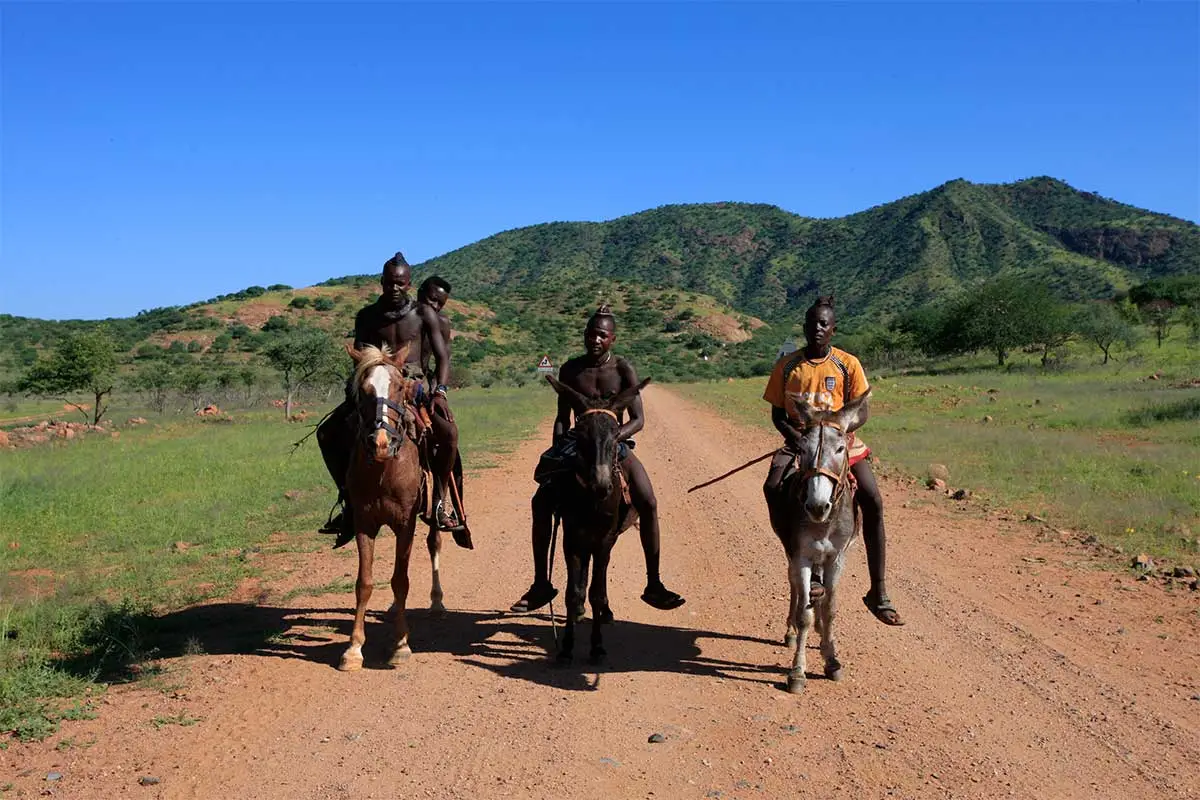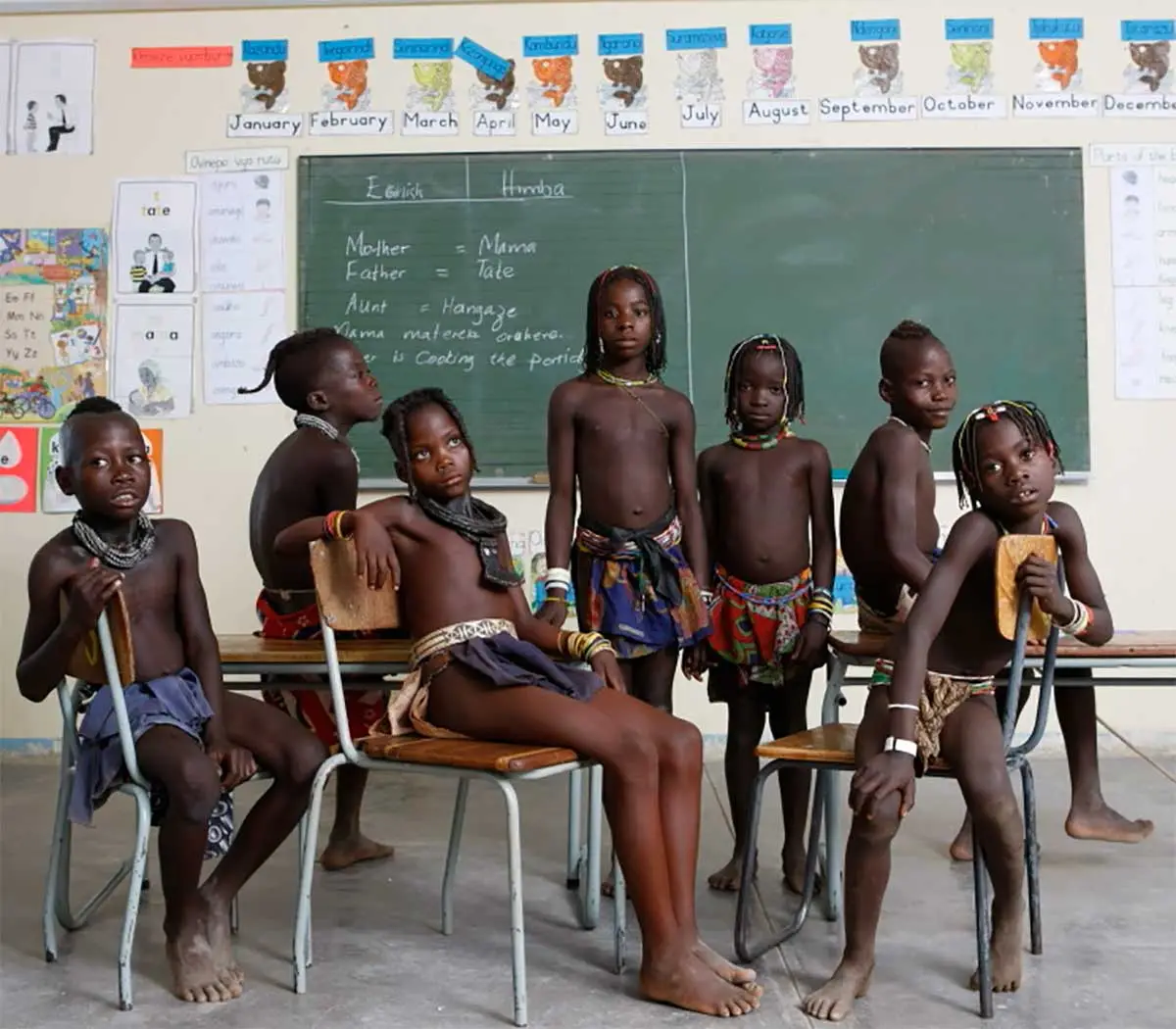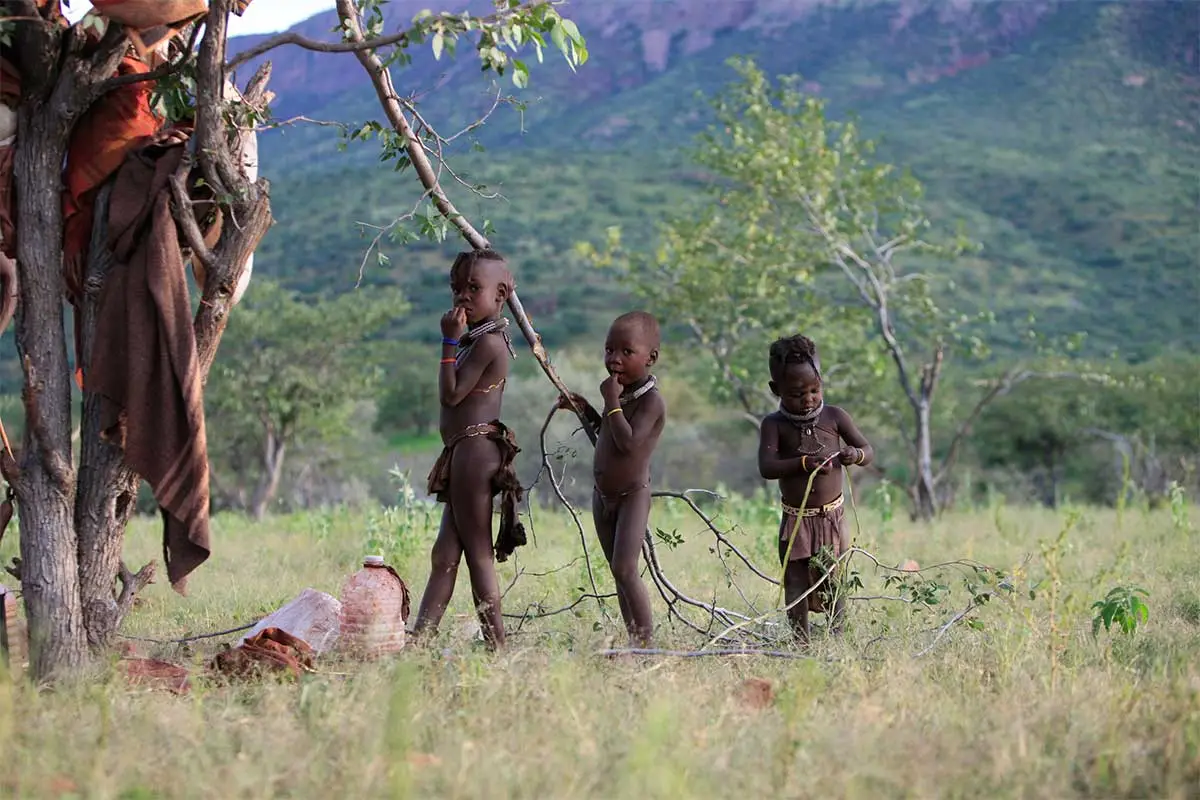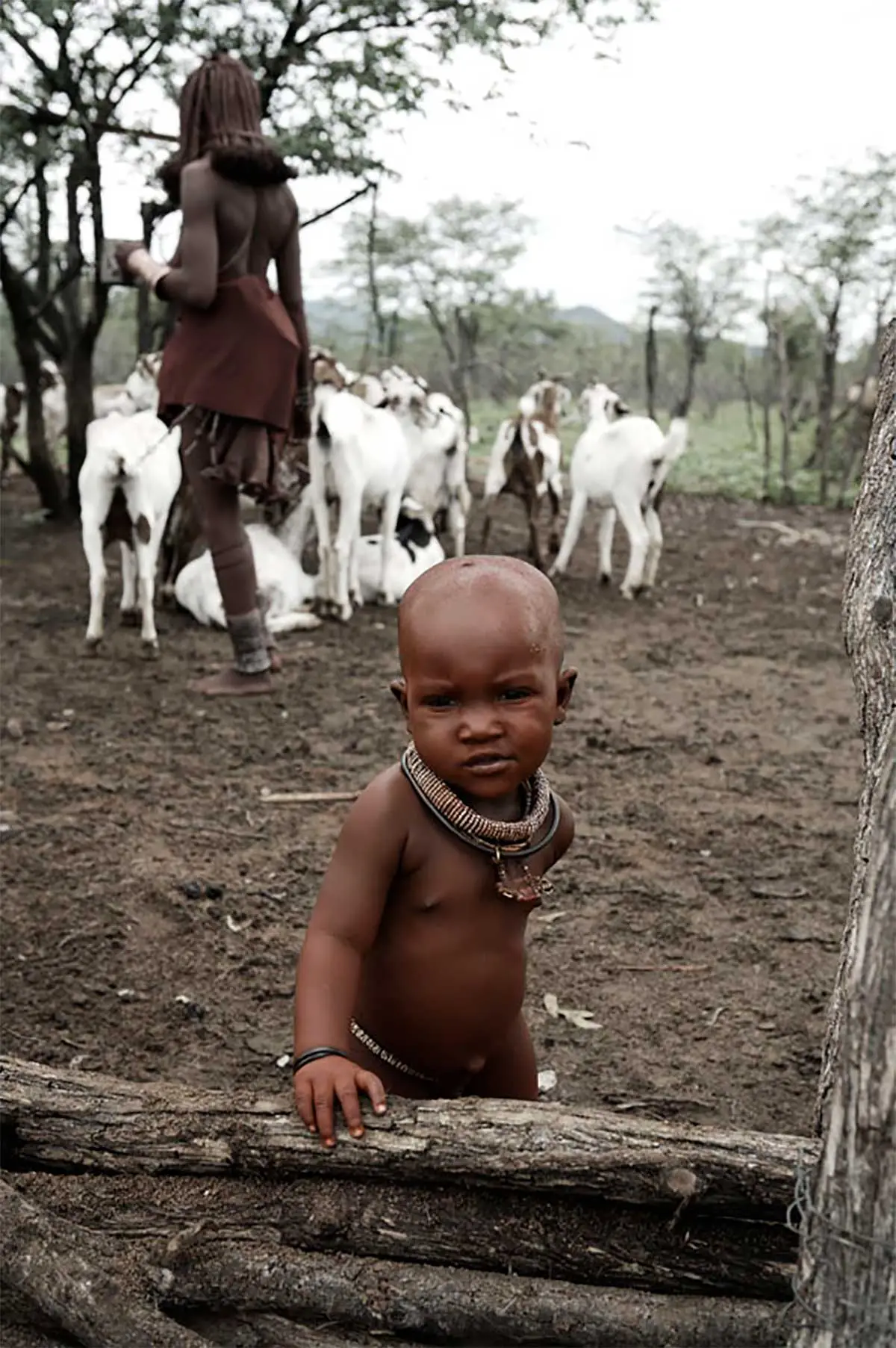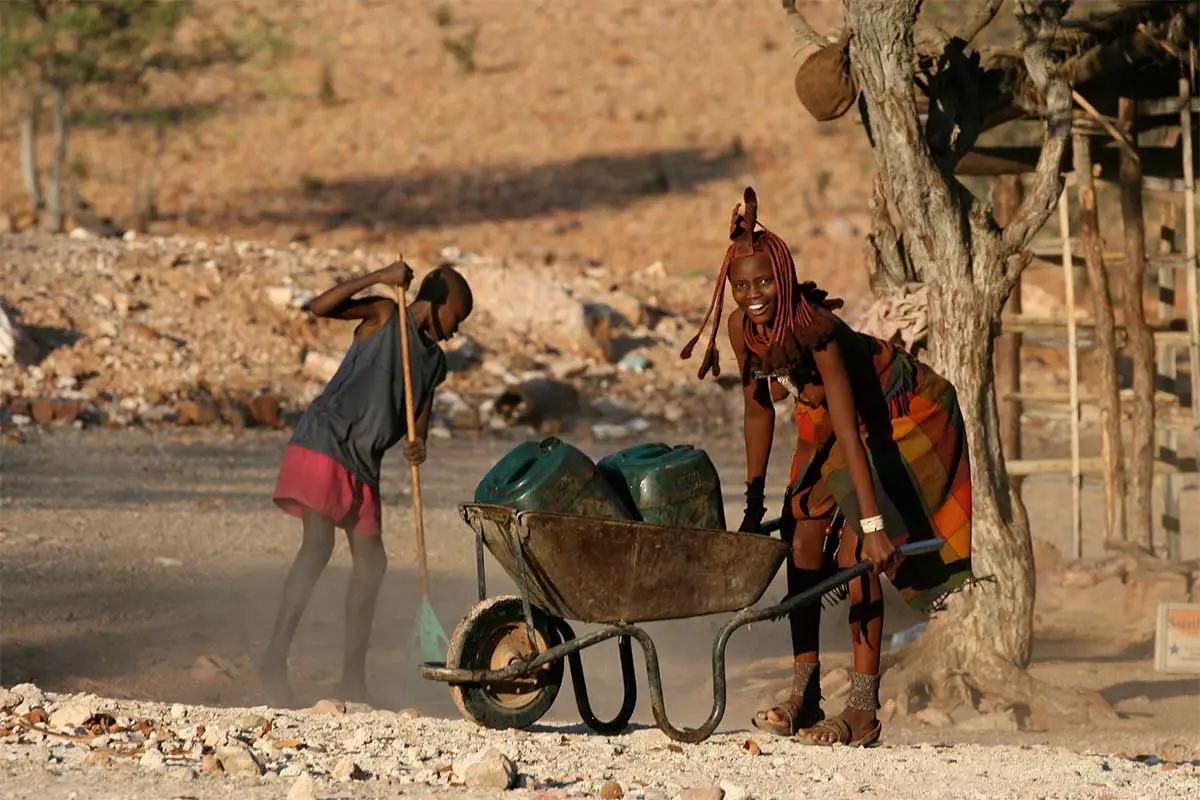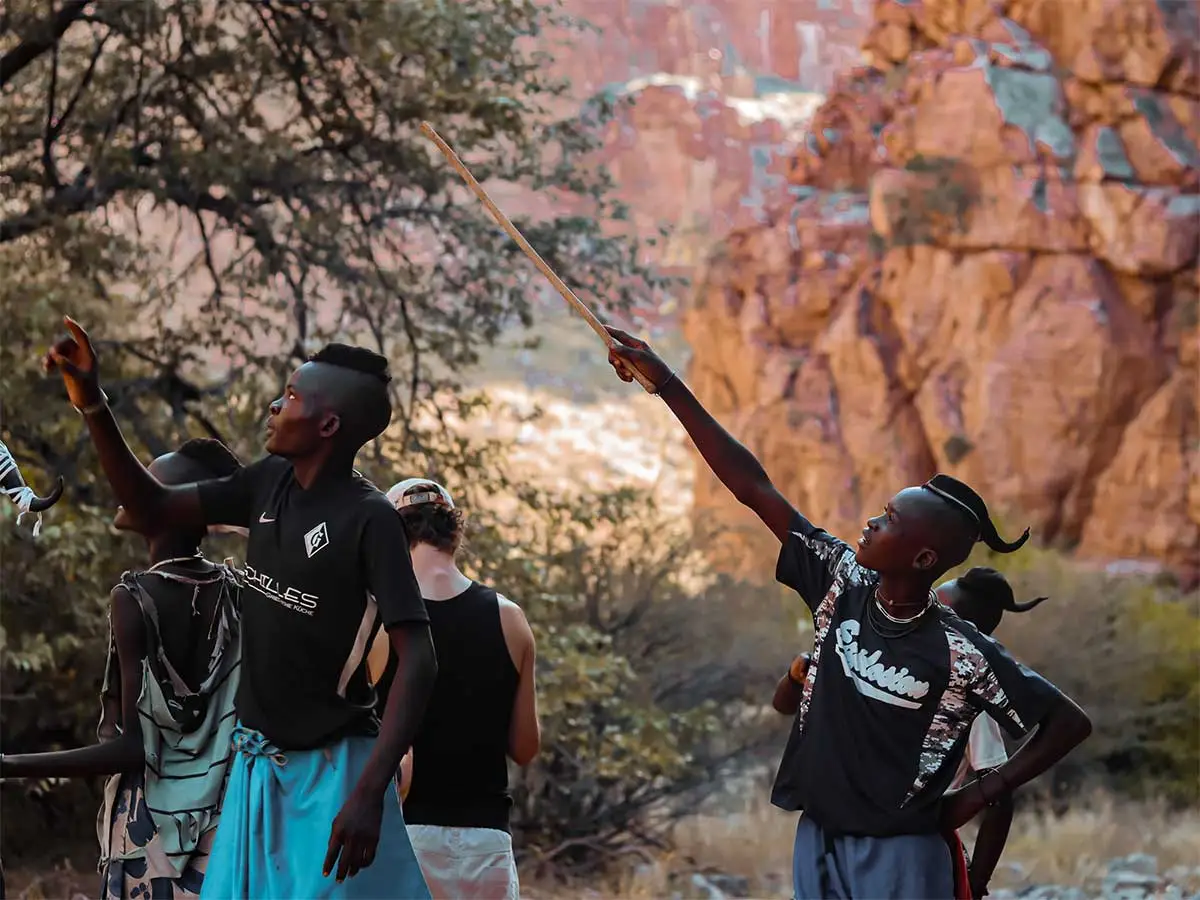
More than anything else, Kaokoland and Epupa are known for the Himba – traditional, semi-nomadic people who have lived in this remote part of Namibia for generations. Their lifestyle, culture, and appearance are like nothing else you’ll find in Africa, and spending time with them is something truly special.
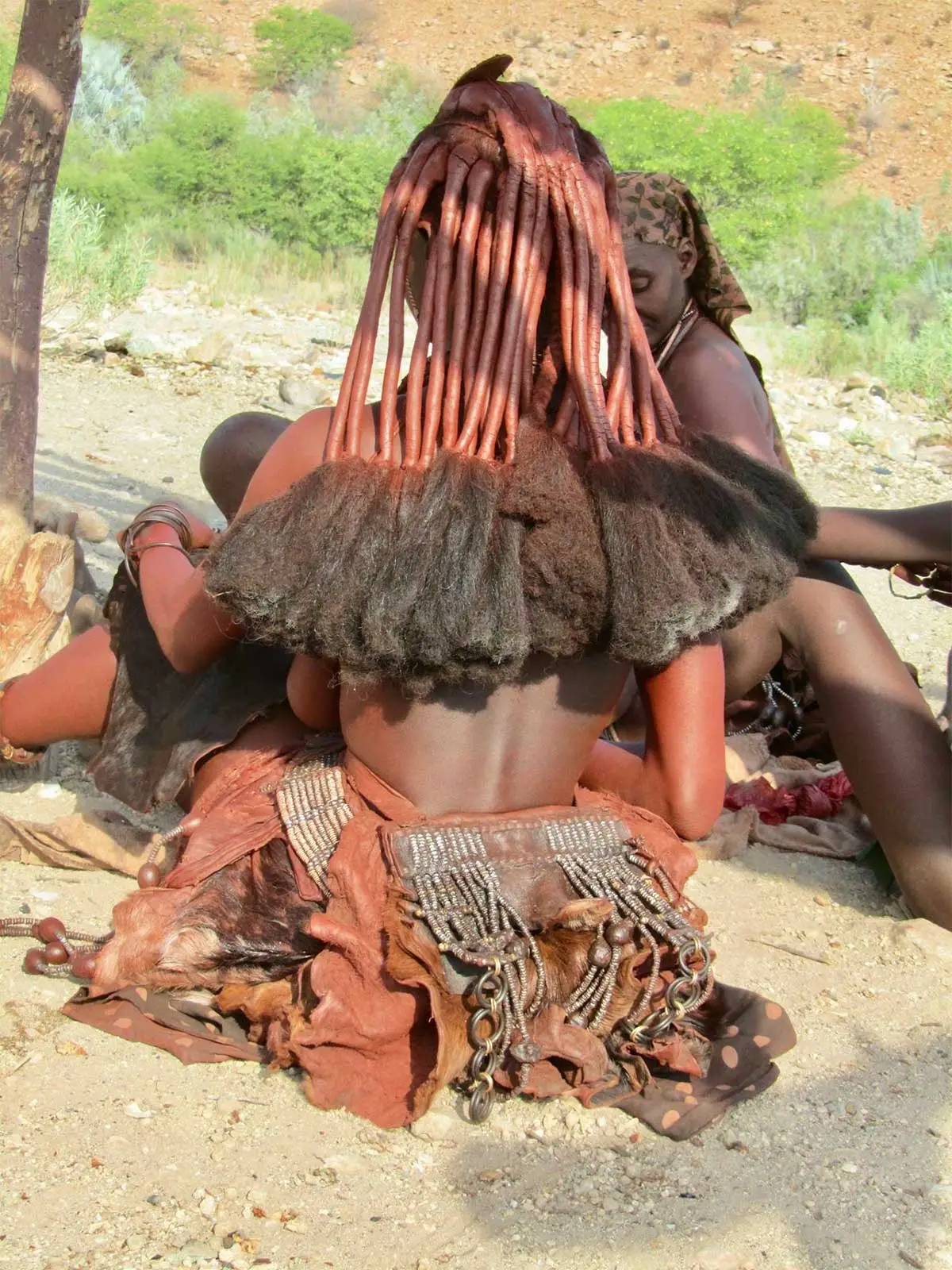
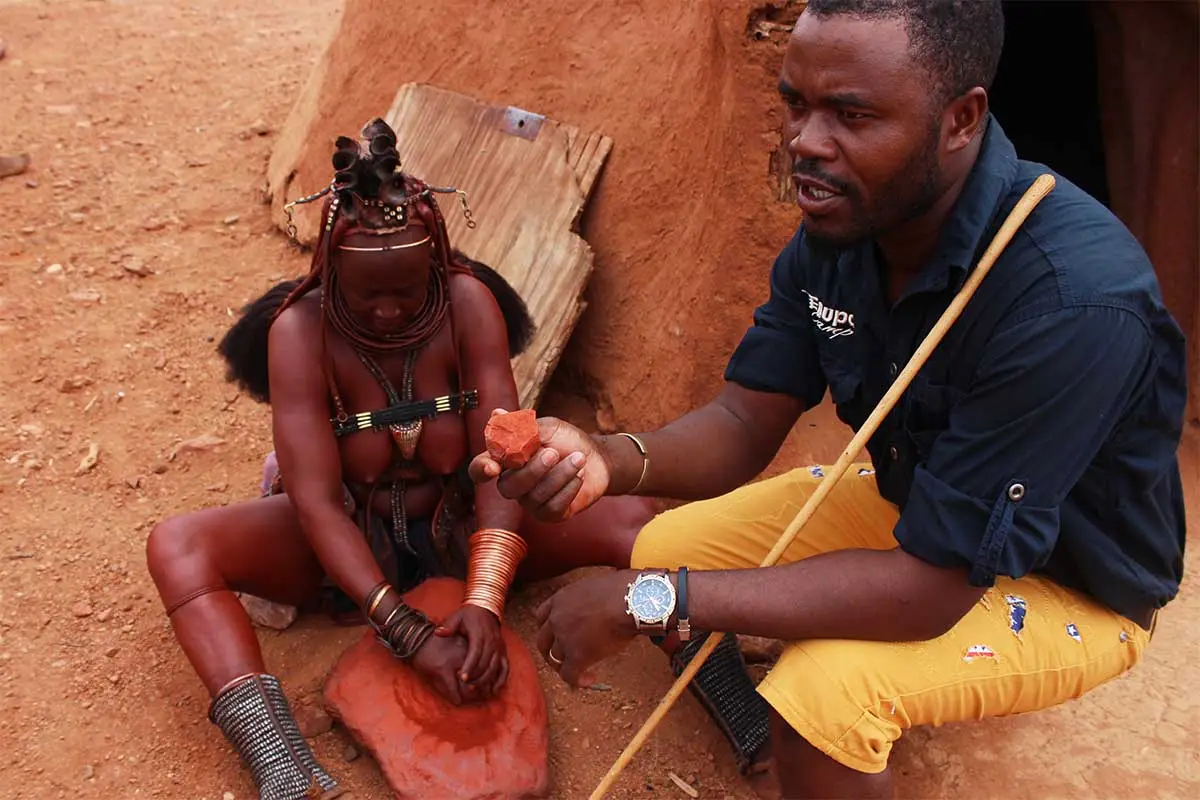
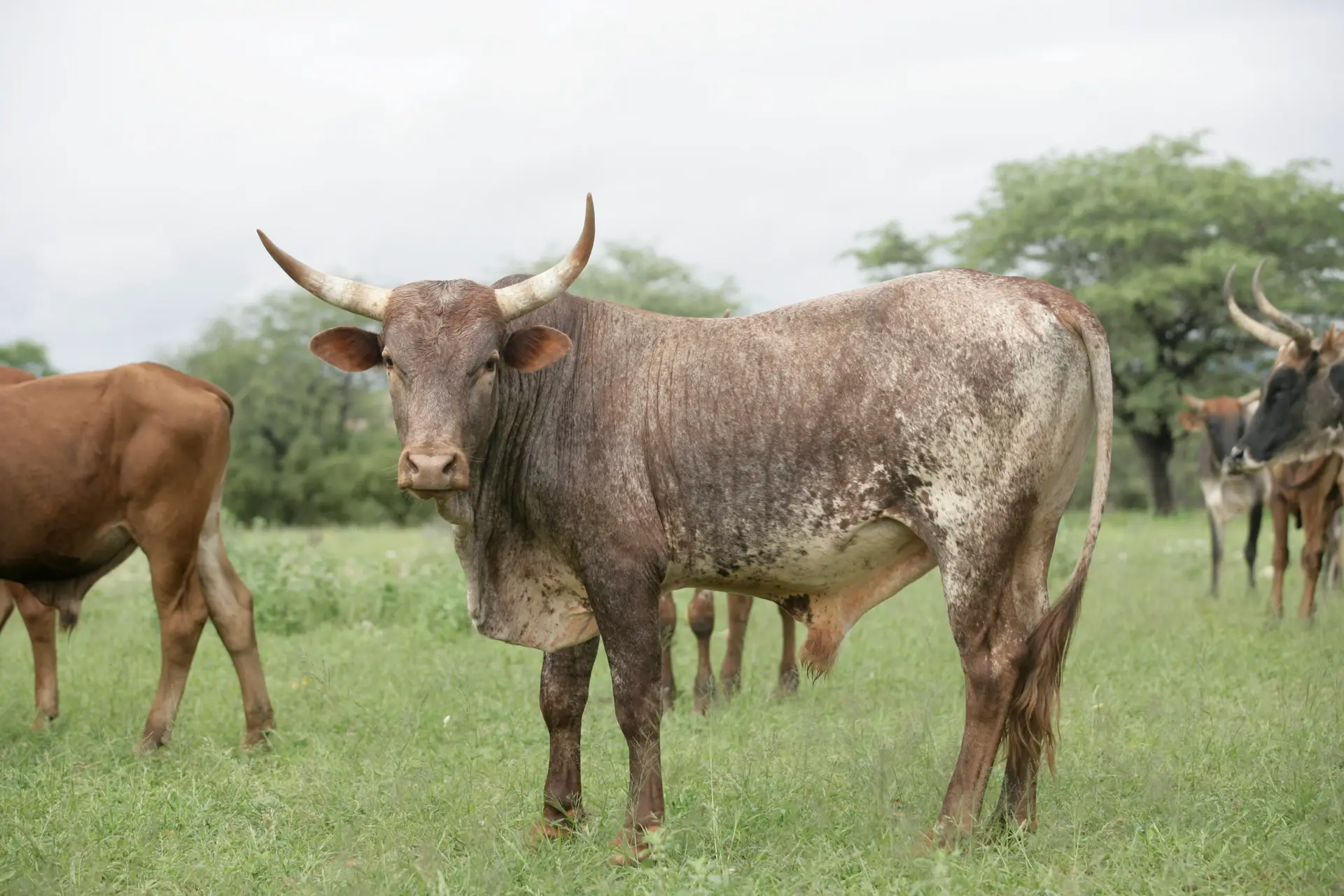
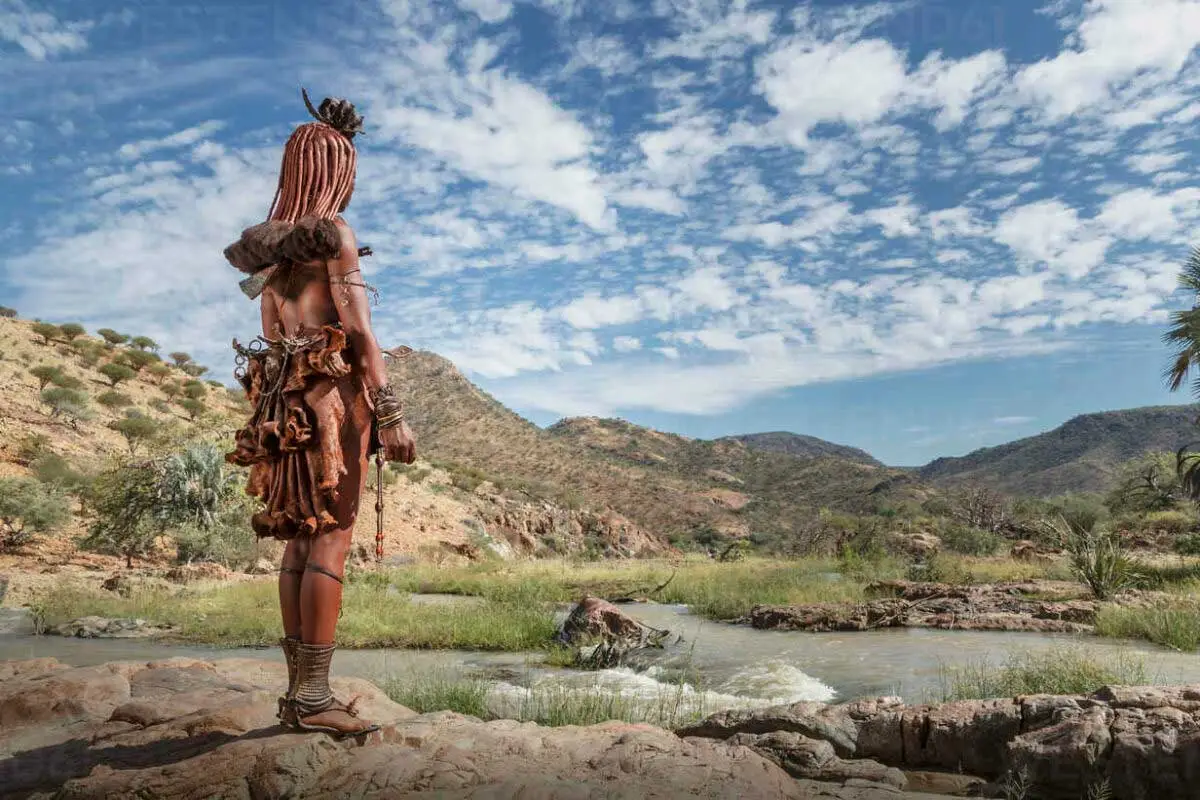
Himba women are known for their striking red-toned skin, achieved by applying a homemade body butter made from ochre, cattle fat, herbs, and leaves. It’s both beautiful and practical – protecting them from the desert sun, bugs, and dry air. Their look is deeply tied to their identity and culture.
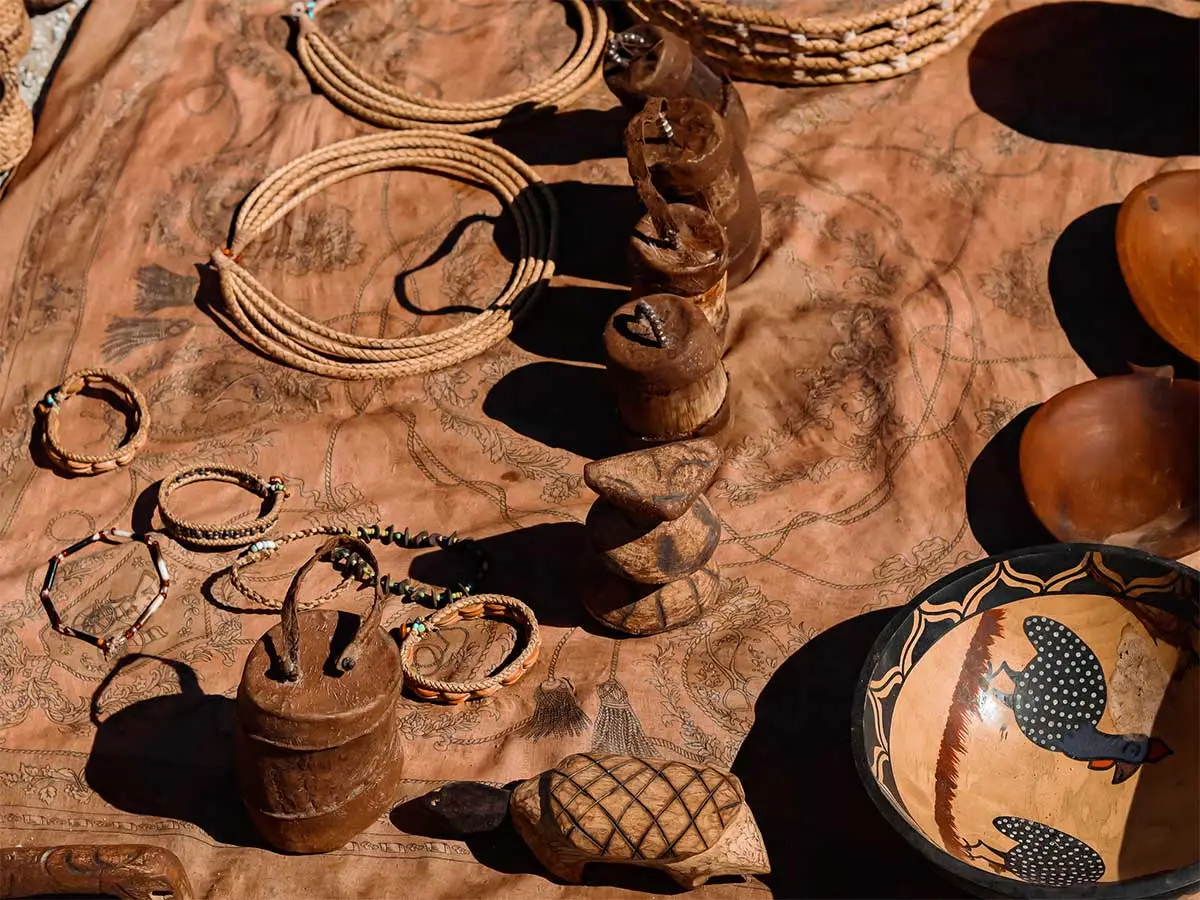
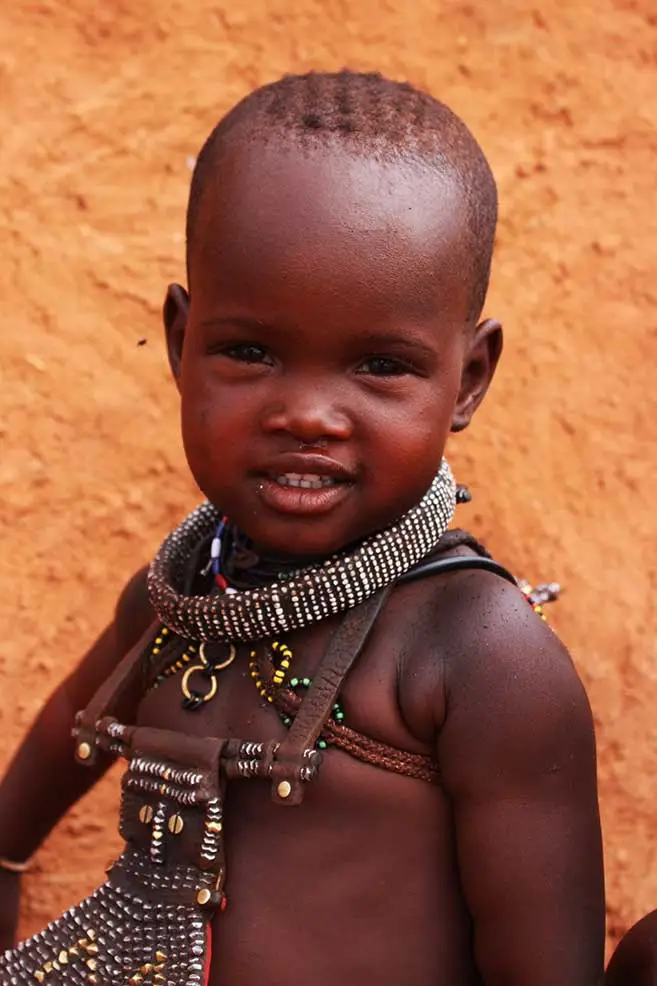
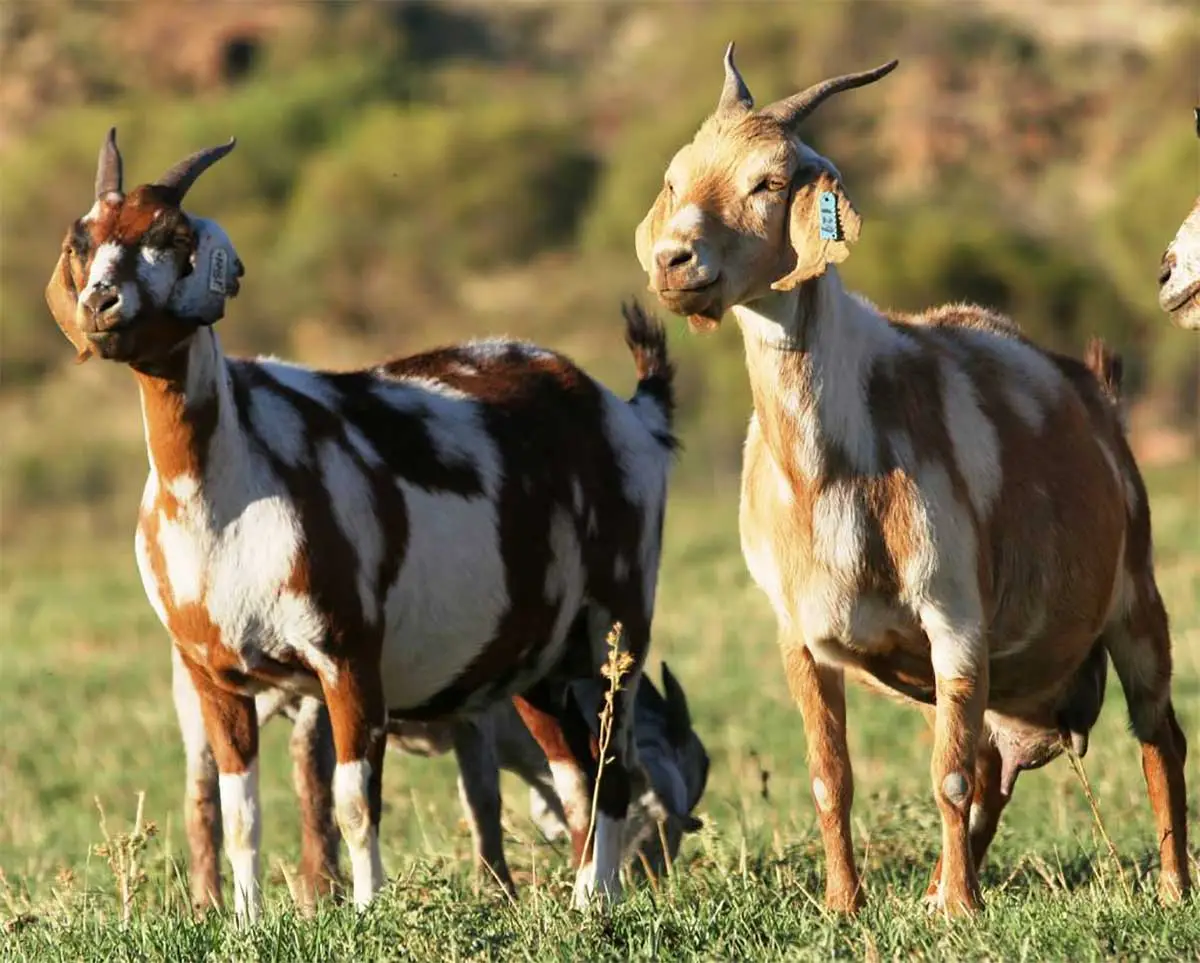
They wear beautifully crafted skirts made of goatskin, decorated with shells and handmade jewelry from copper, iron, and beads. Married women often wear elaborate headdresses and traditional hairstyles with multiple braids.
Men have their own style too – young, unmarried men wear a single braid, while married men cover their hair with a turban. Their clothing is simplistic loin cloths with a shirt, unique bulky necklaces and always a walking stick.
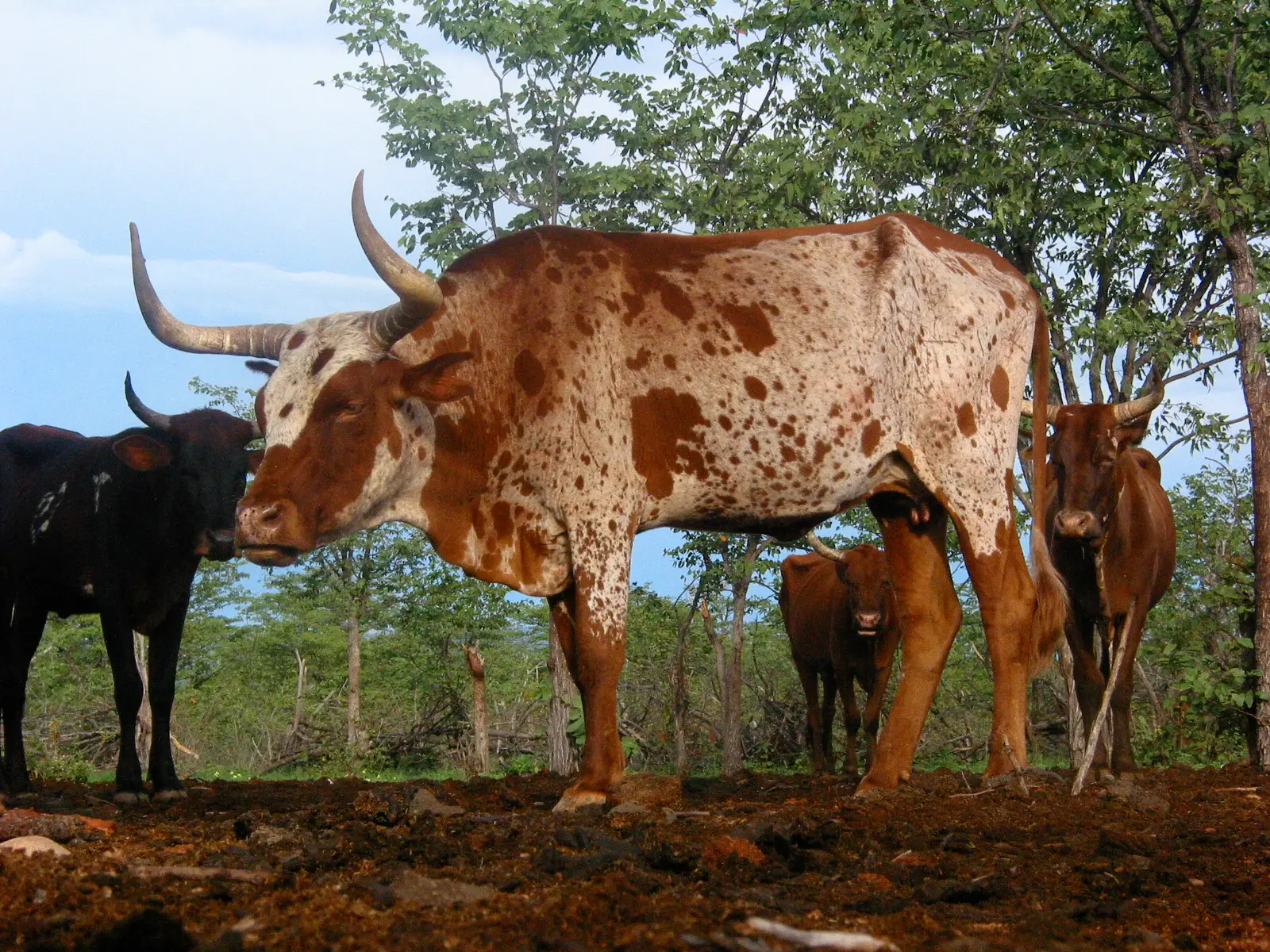
Visiting a Himba homestead is like stepping into a completely different rhythm of life. The cone shaped rooms are built with Mopane tree branches and covered in red mud and cow manure – natural, simplistic, and suited to the climate. The homestead includes an animal kraal, storage spaces, and a the holy fire, which holds deep spiritual significance.
Epupa Camp offers respectful, guided visits to nearby Himba villages every day—a chance to connect, learn, and share stories.
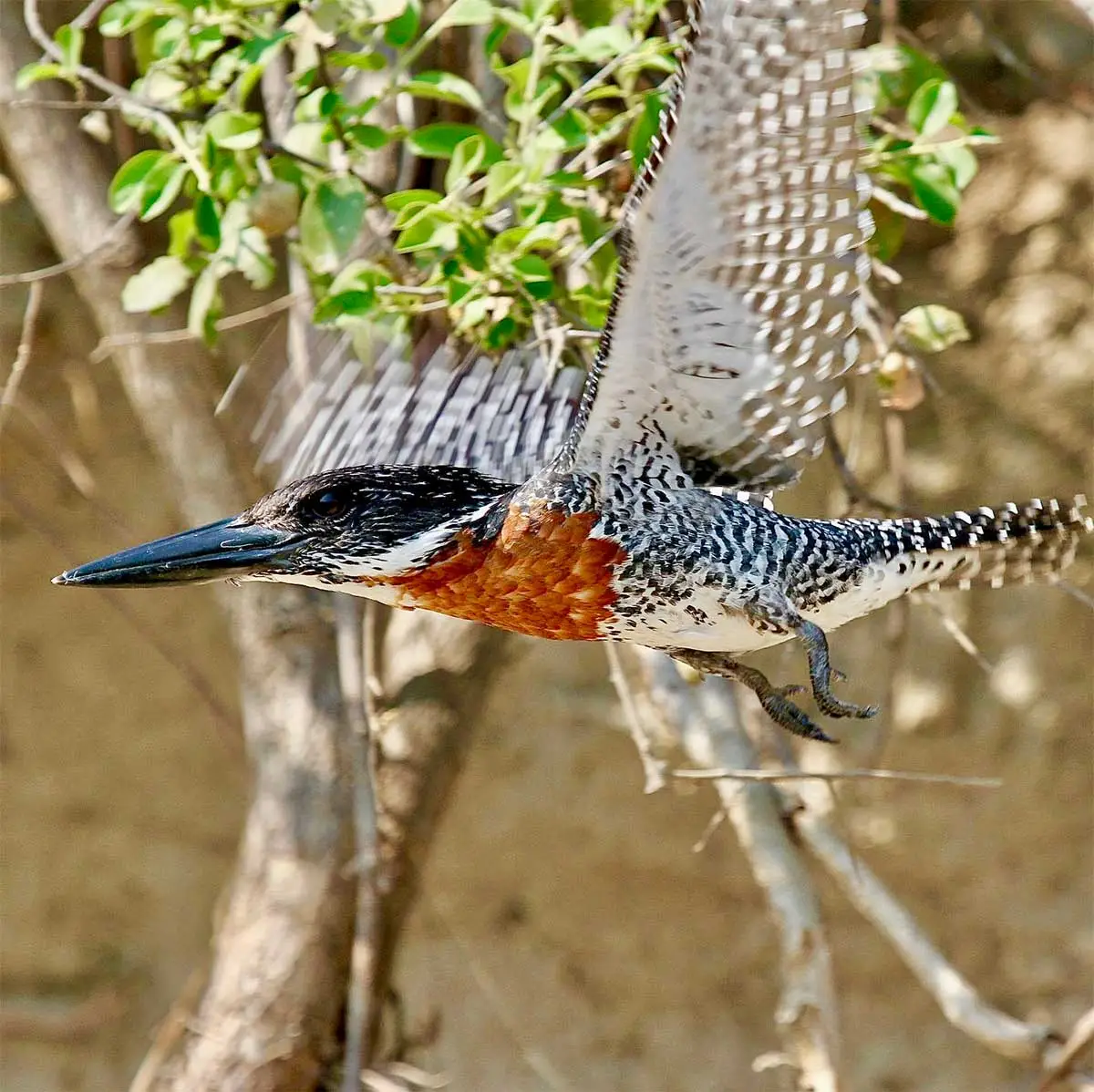
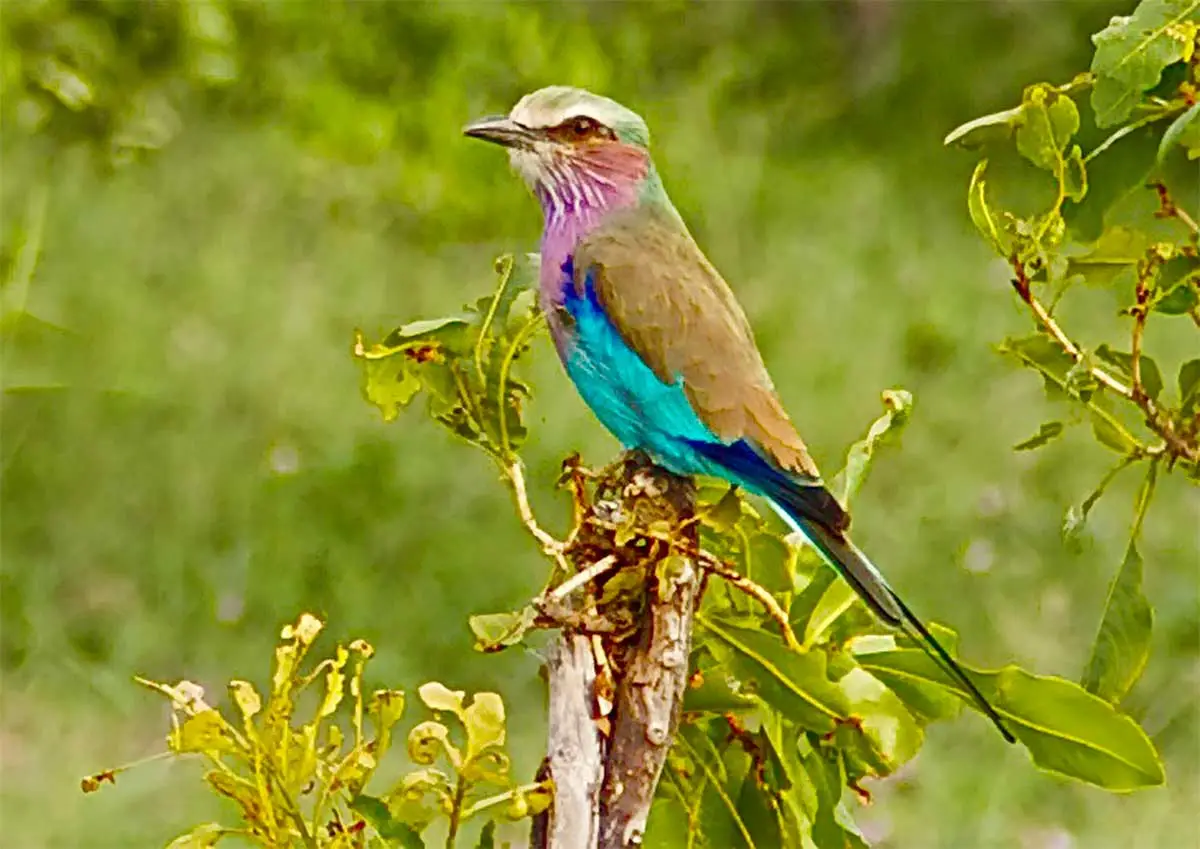
With over 240 bird species recorded in the area, Epupa is a birder’s paradise. In May 2025, the rare Angola Cave Chat was spotted in a nearby gorge towards the Baines mountains – an exciting moment for both our birding guide and guests! Keep an eye out for the Rufous-tailed Palm Thrush, resident at Epupa Camp.
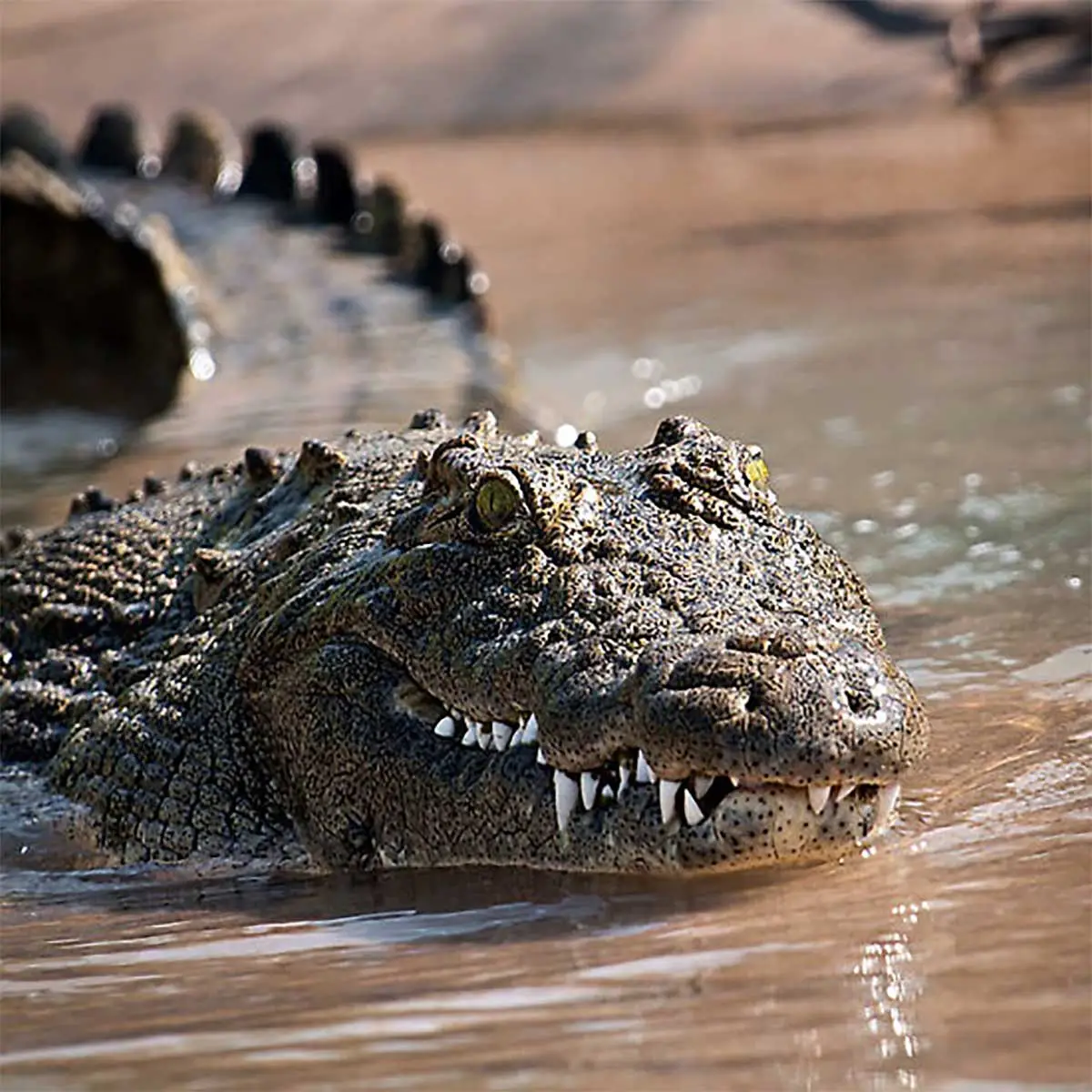
We’ve also got some fascinating reptiles and mammals:
The Kunene River is also home to more than 60 species of fish, including barbel, pike, and various tilapia. And of course, there are plenty of insects, amphibians, and other little creatures that bring the wilderness to life.
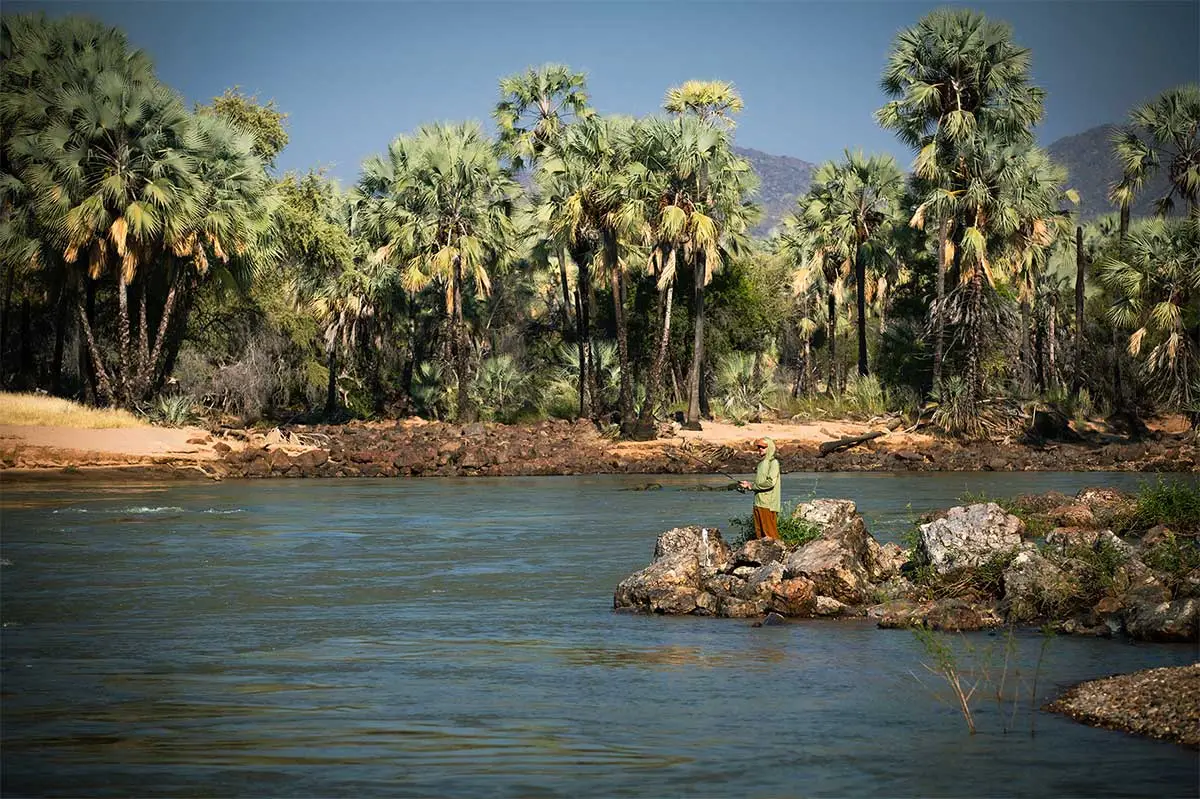
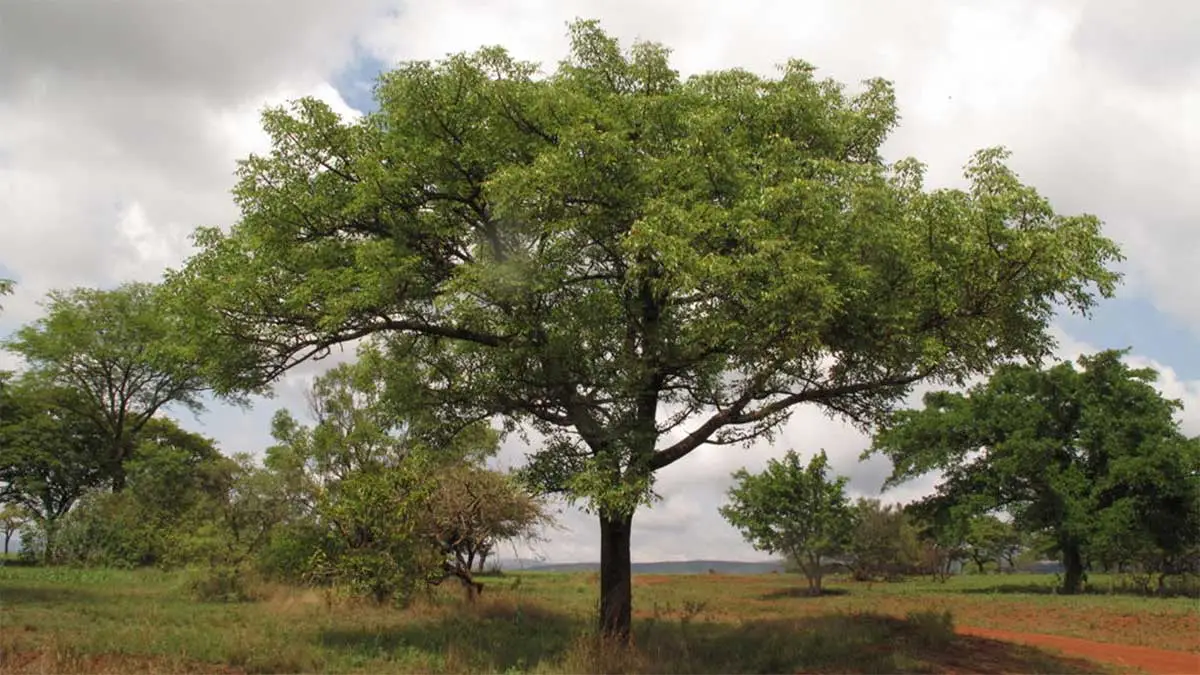
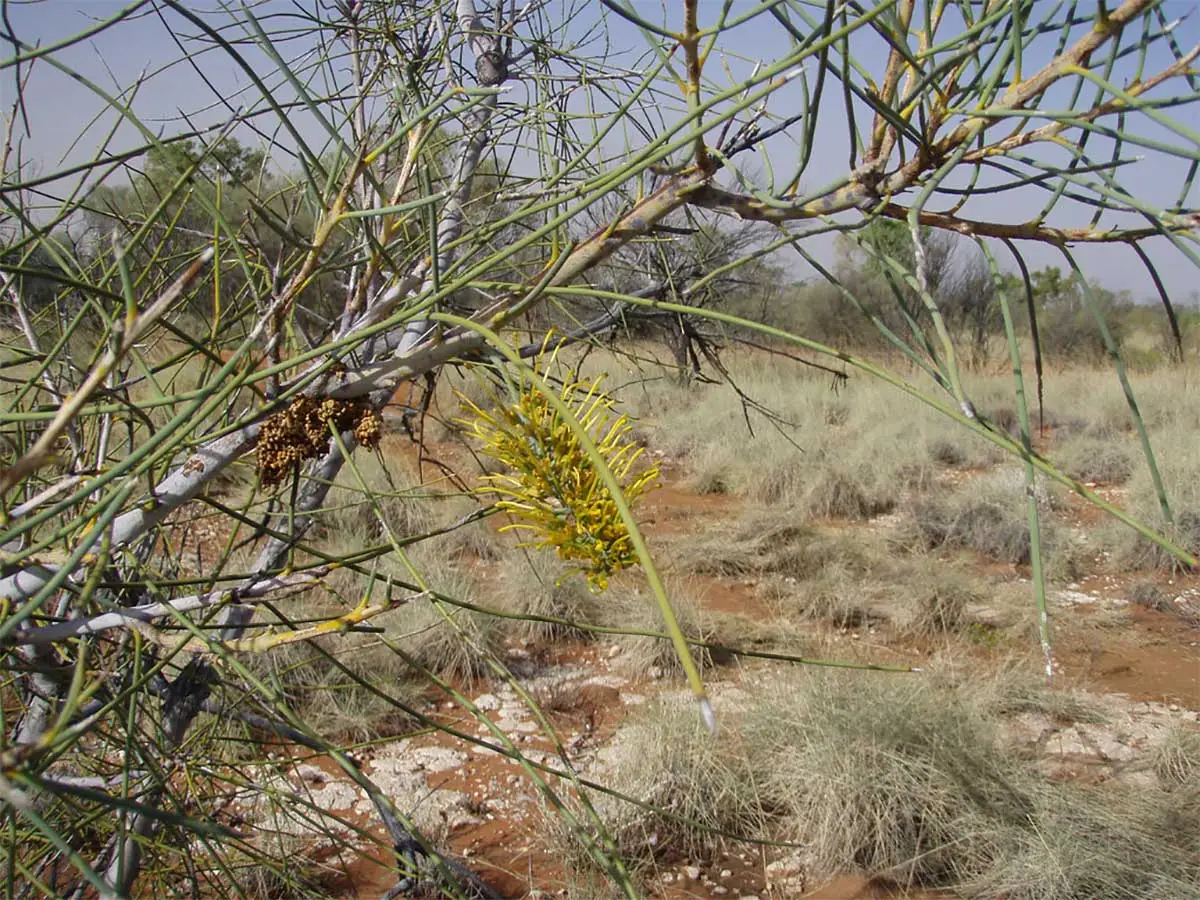
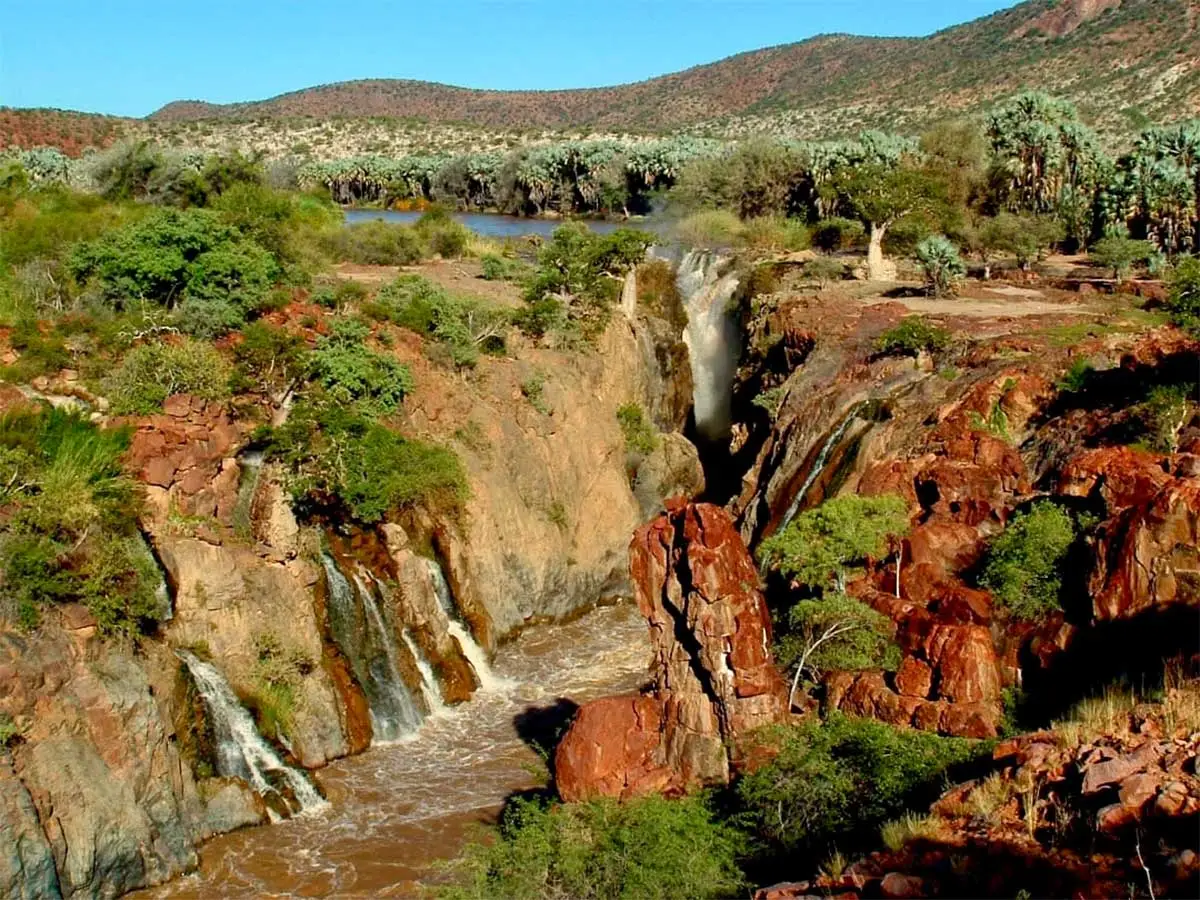
Despite the arid landscape, the region is rich with fascinating trees and plants. You’ll see Makalani Palms, Baobabs, Sycamore Figs, Leadwood trees, and Mopane scattered through the area.
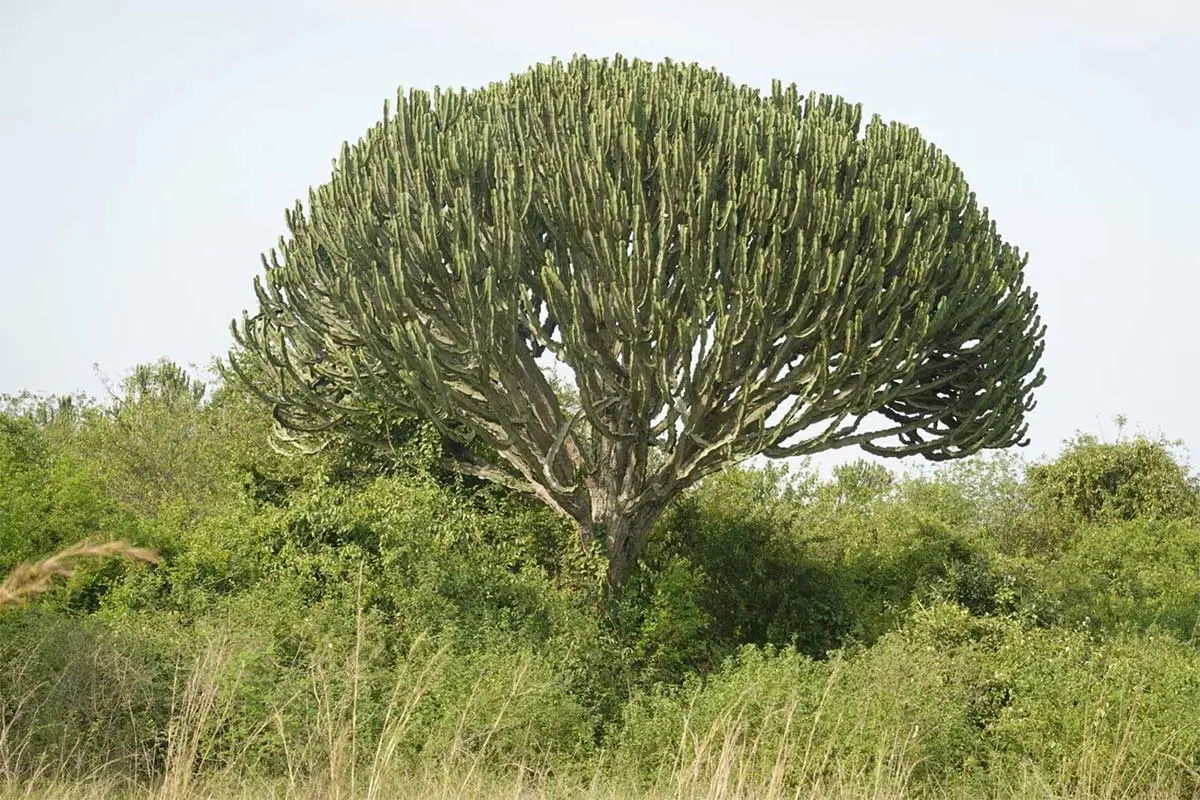
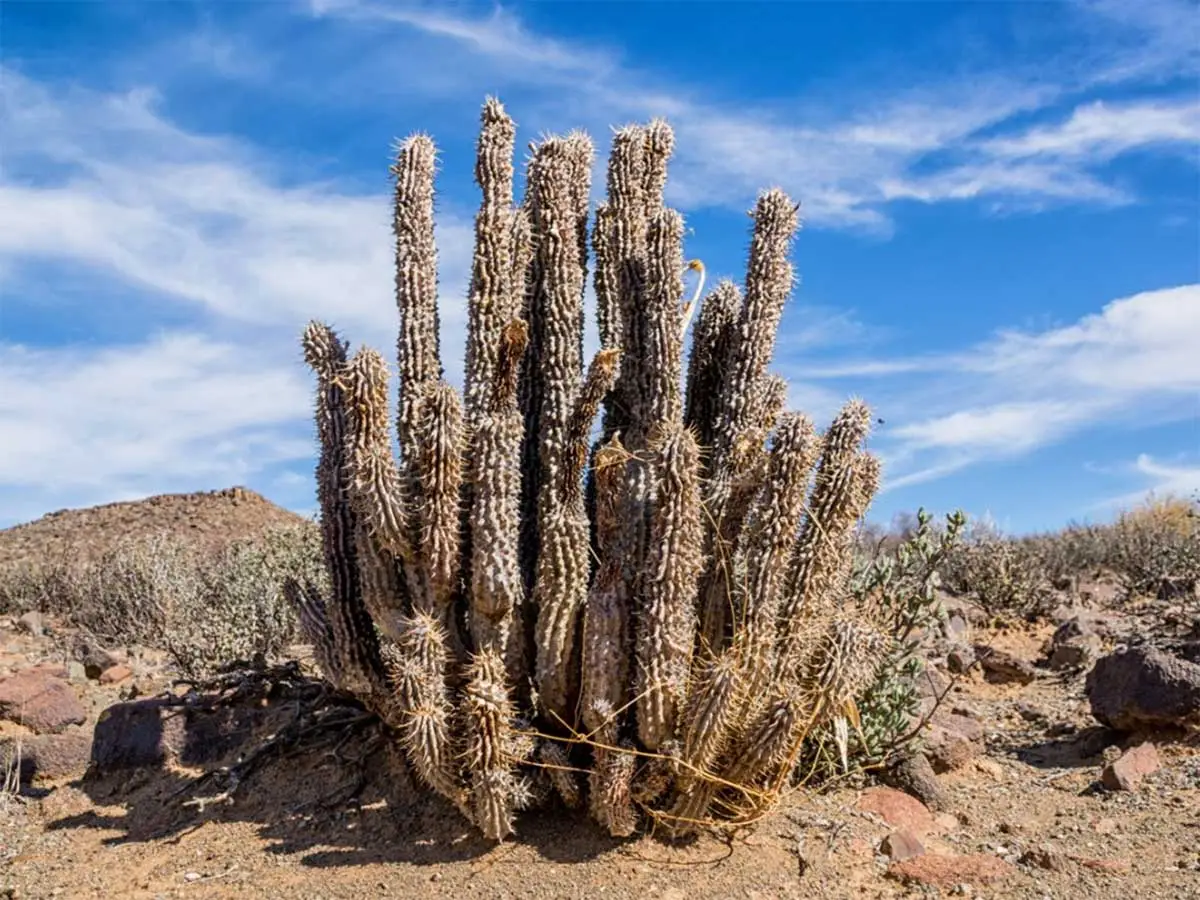
Look closer and you’ll find rare and local plants like the Kaoko cobas, Kunene Black Thorn, various corkwood species, Hoodia, and Euphorbia – many of which have been used for generations for traditional natural remedies.
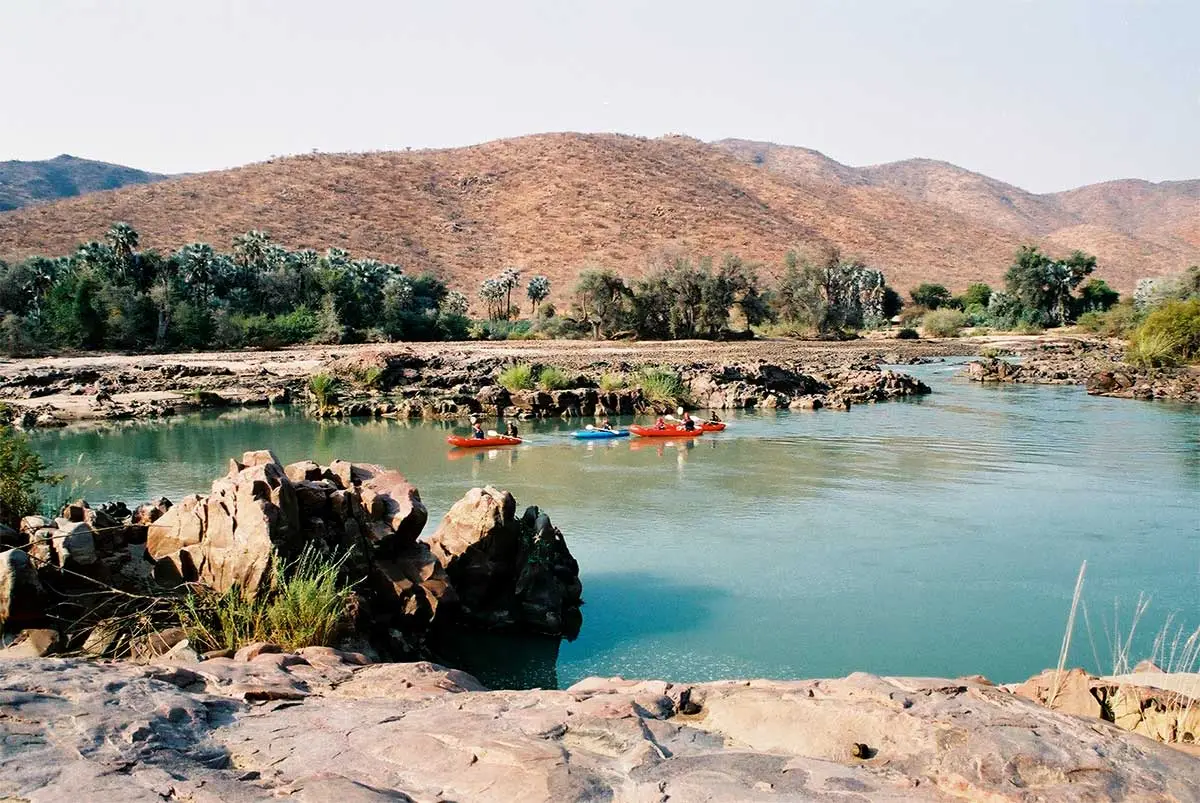
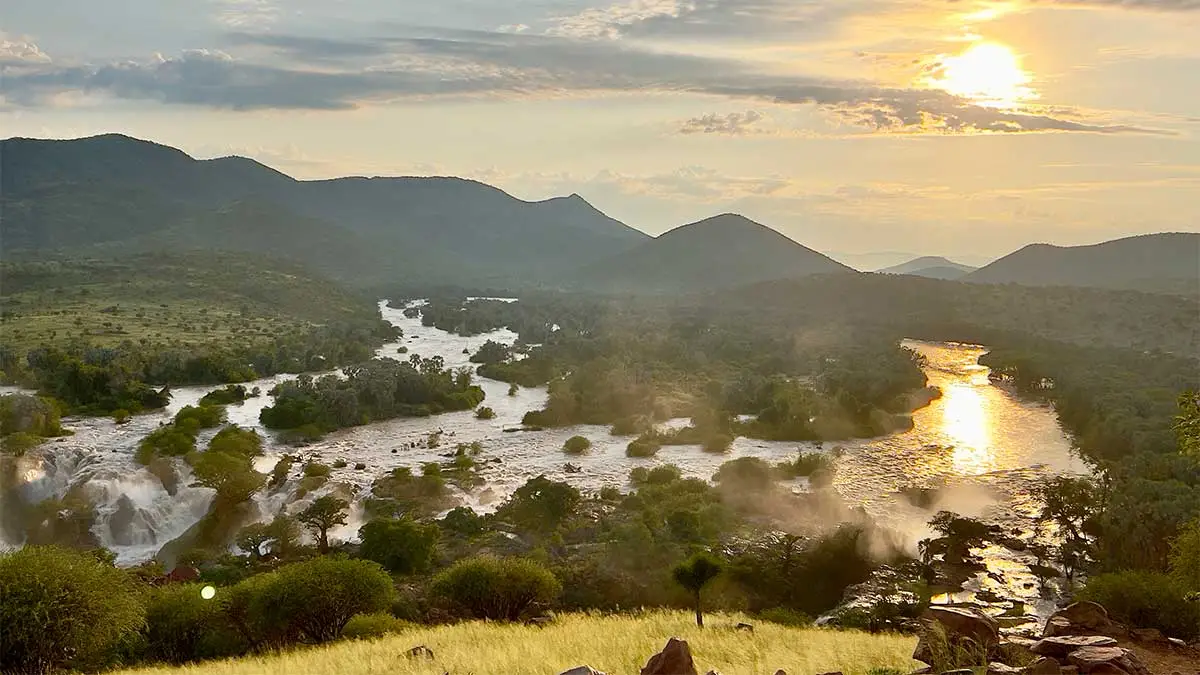
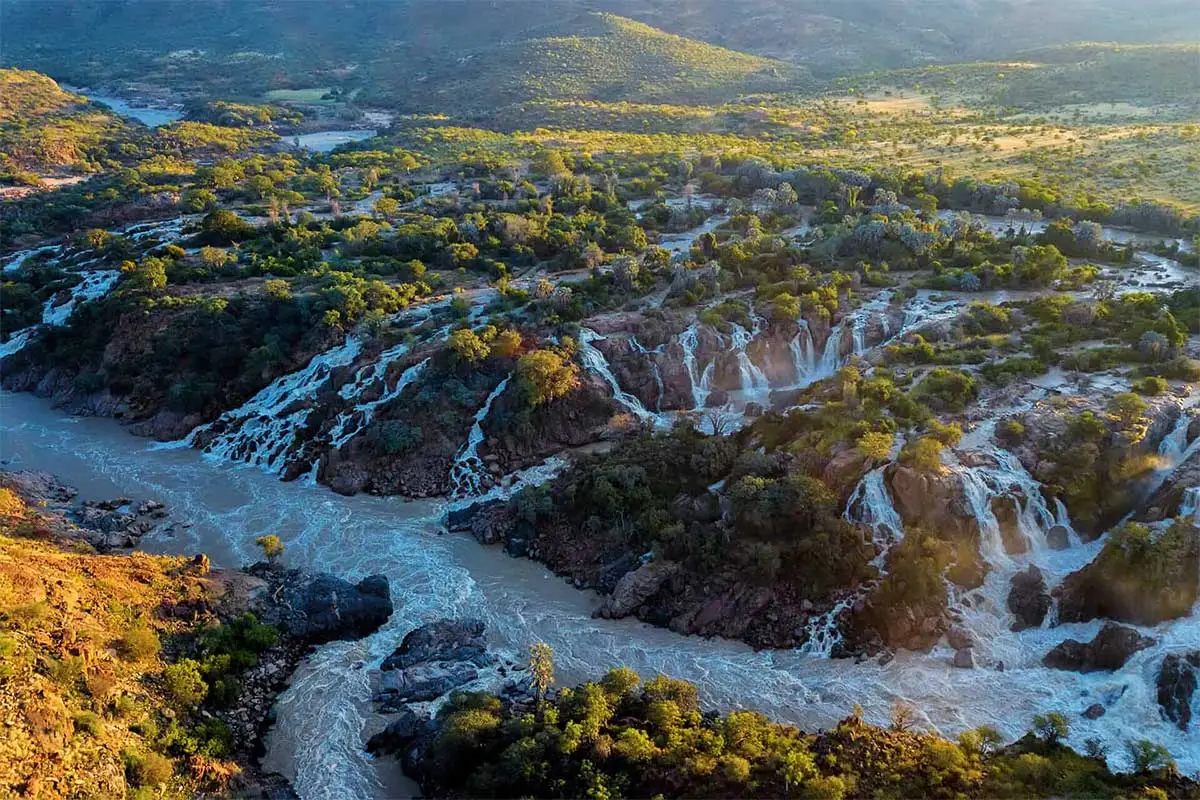
The Kunene River is the heartbeat of Epupa. Flowing from the Angolan highlands to the Atlantic Ocean, it carves a lush green corridor through the desert – bringing life to the people, plants, and animals along its banks.
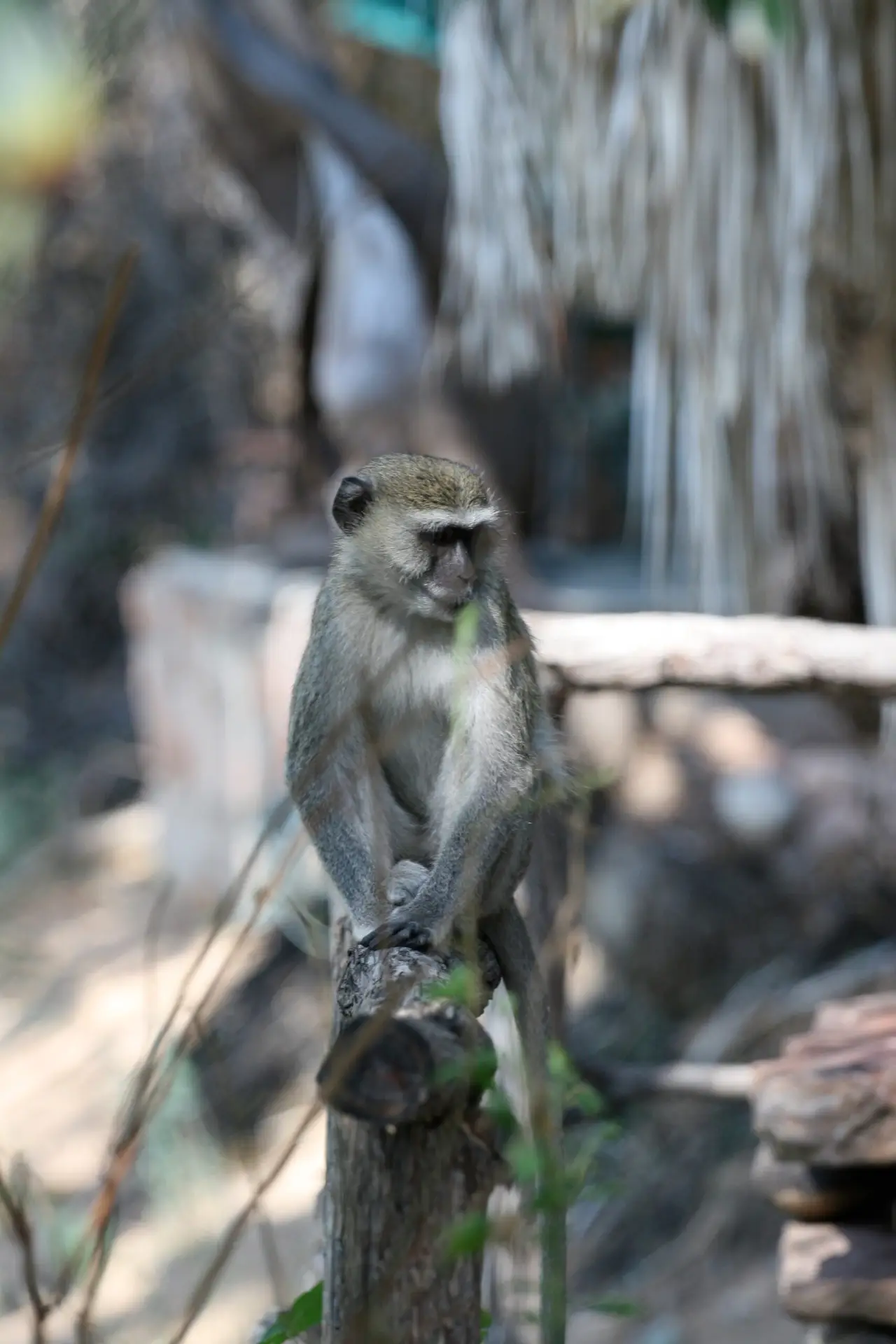
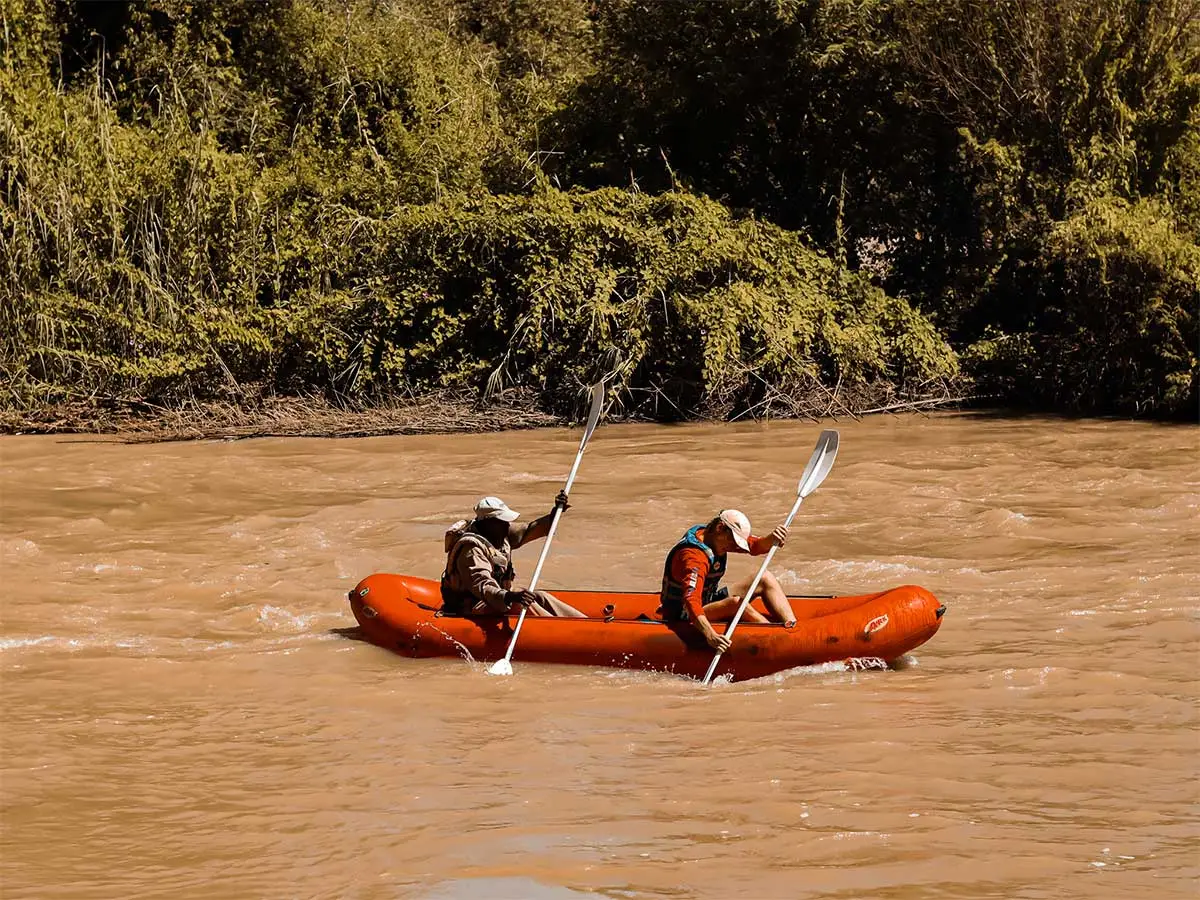
You’ll often see Himba families collecting water, bathing, or just cooling off at the river’s edge. Whether you have joined one of our rafting excursions or simply relaxing at Epupa Camp, the river is always alive with movement and sound – birds nesting, monkeys playing, and the steady flow of water in the background.
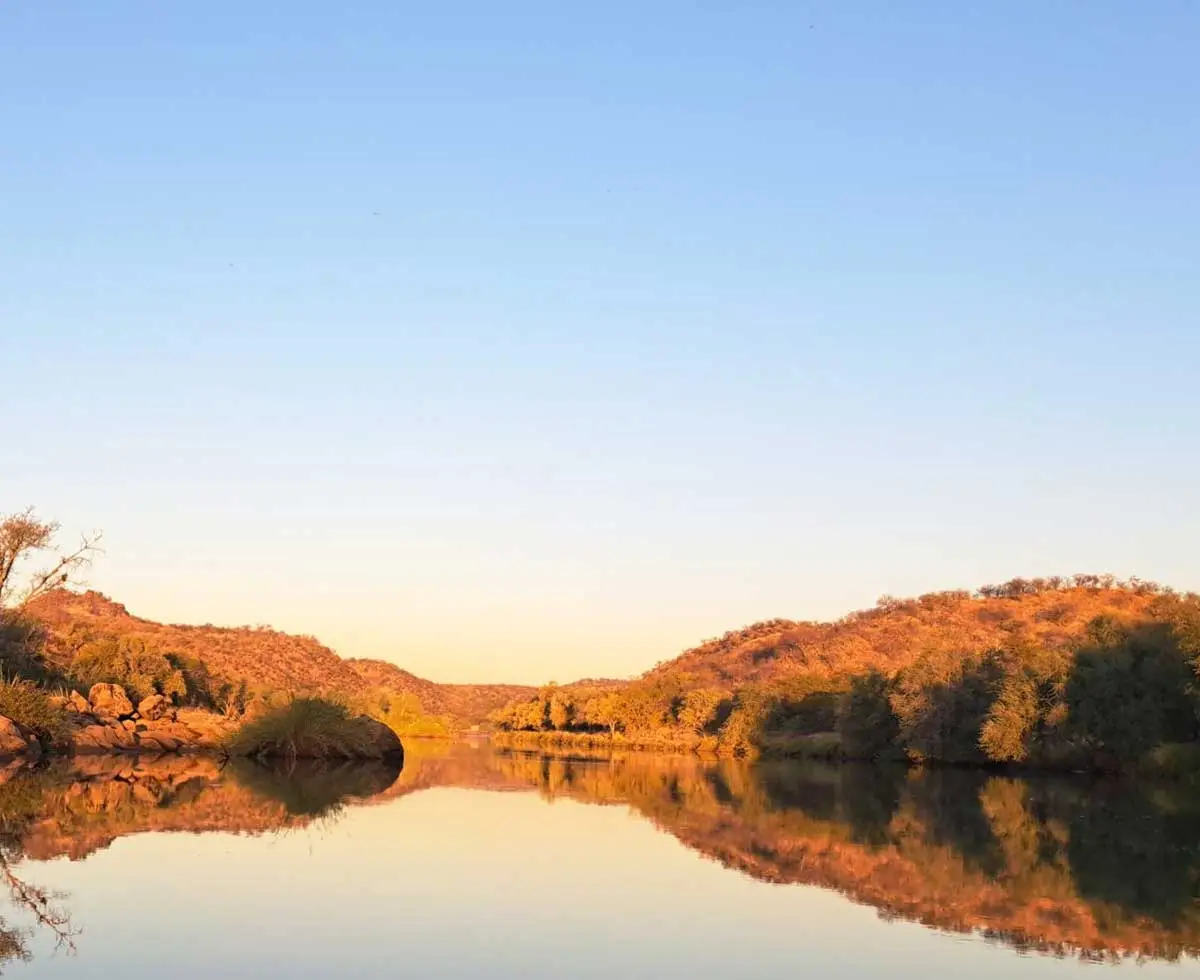
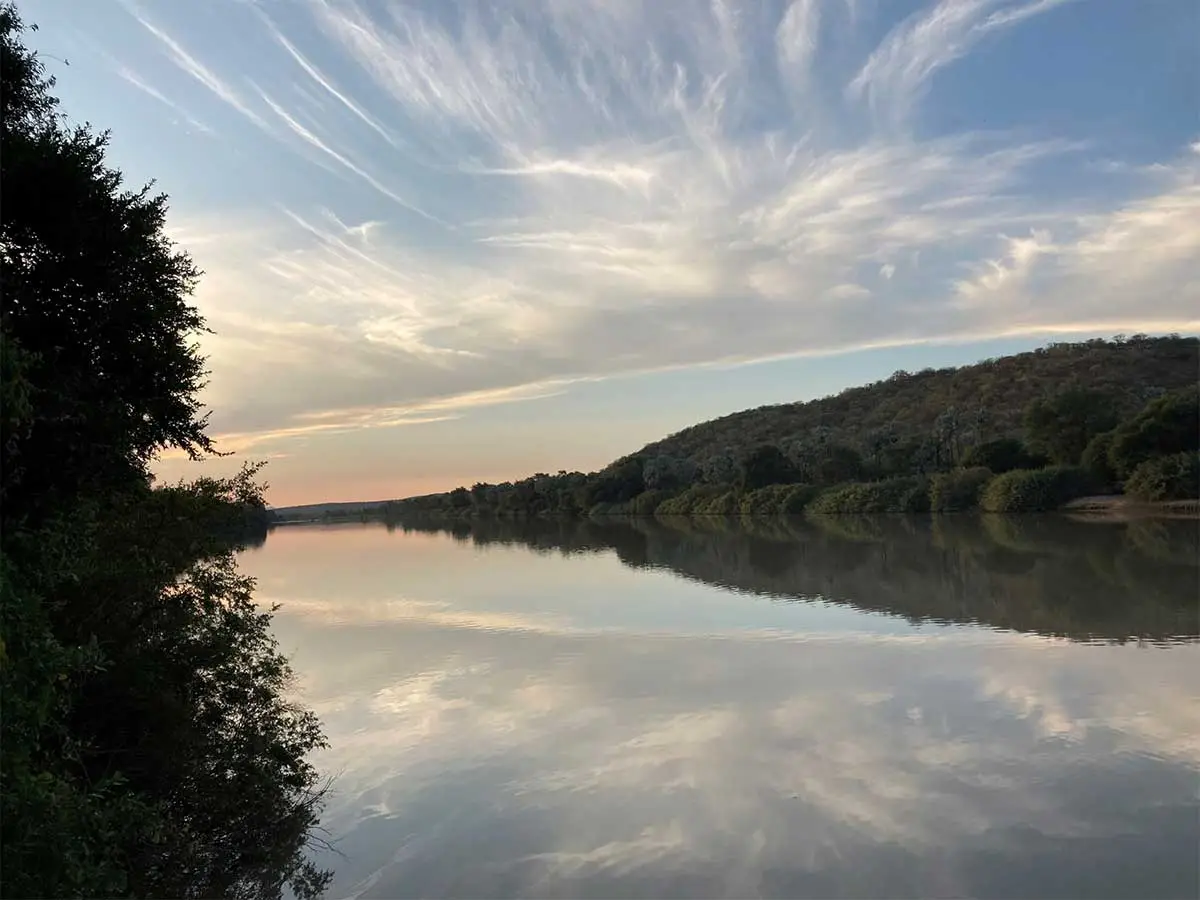
Epupa Camp offers the best riverfront seats for watching the river come to life, from morning mist to sunset reflections. You can also cross the only bridge over the Kunene River at Epupa Falls from our front terrace to our private island.
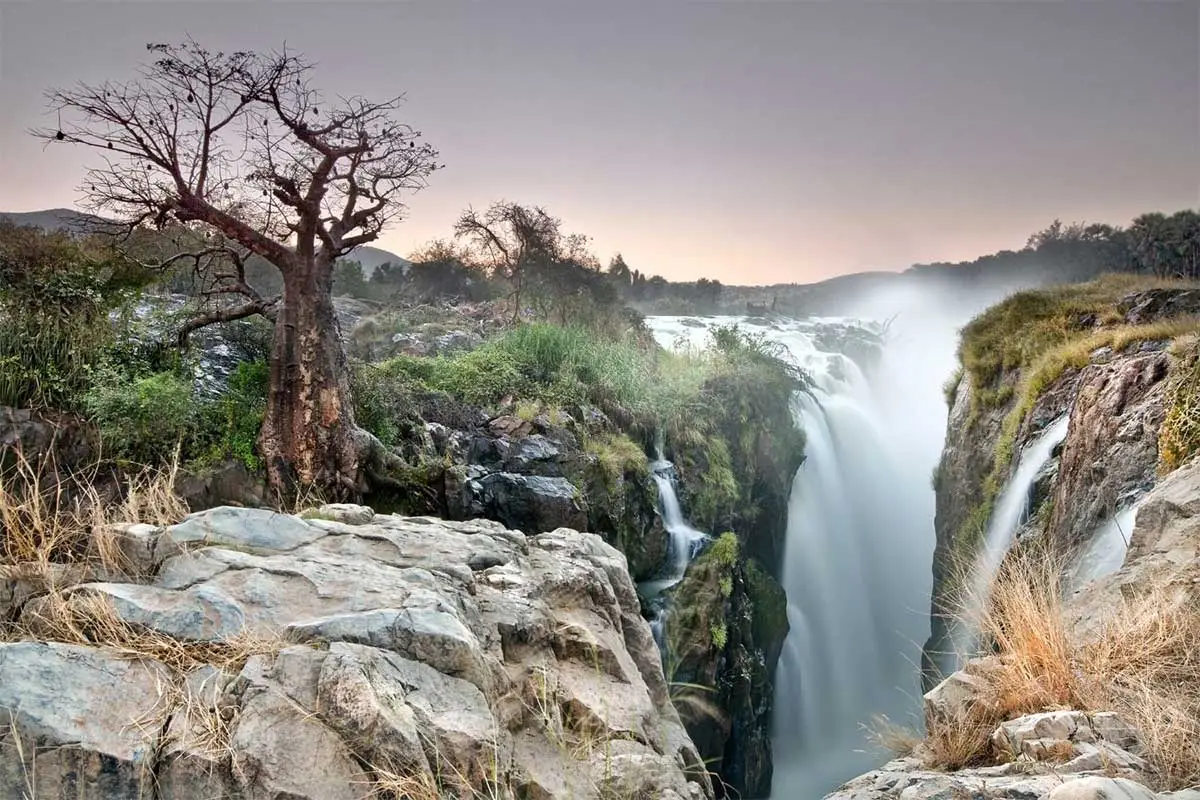
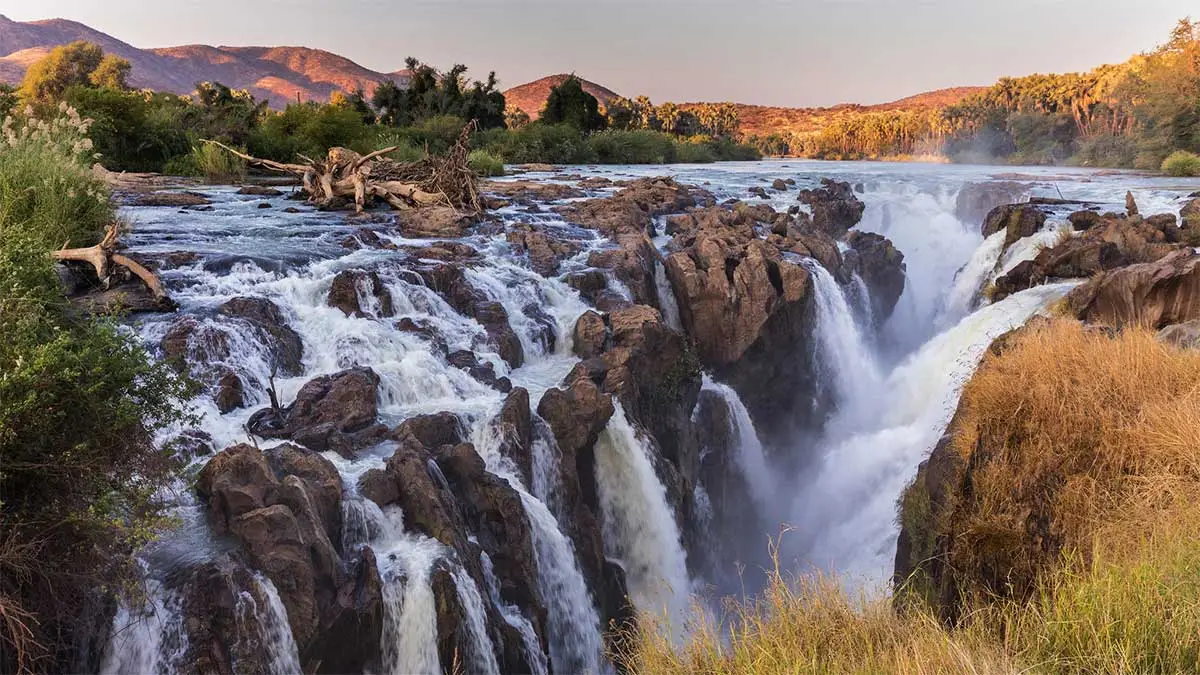
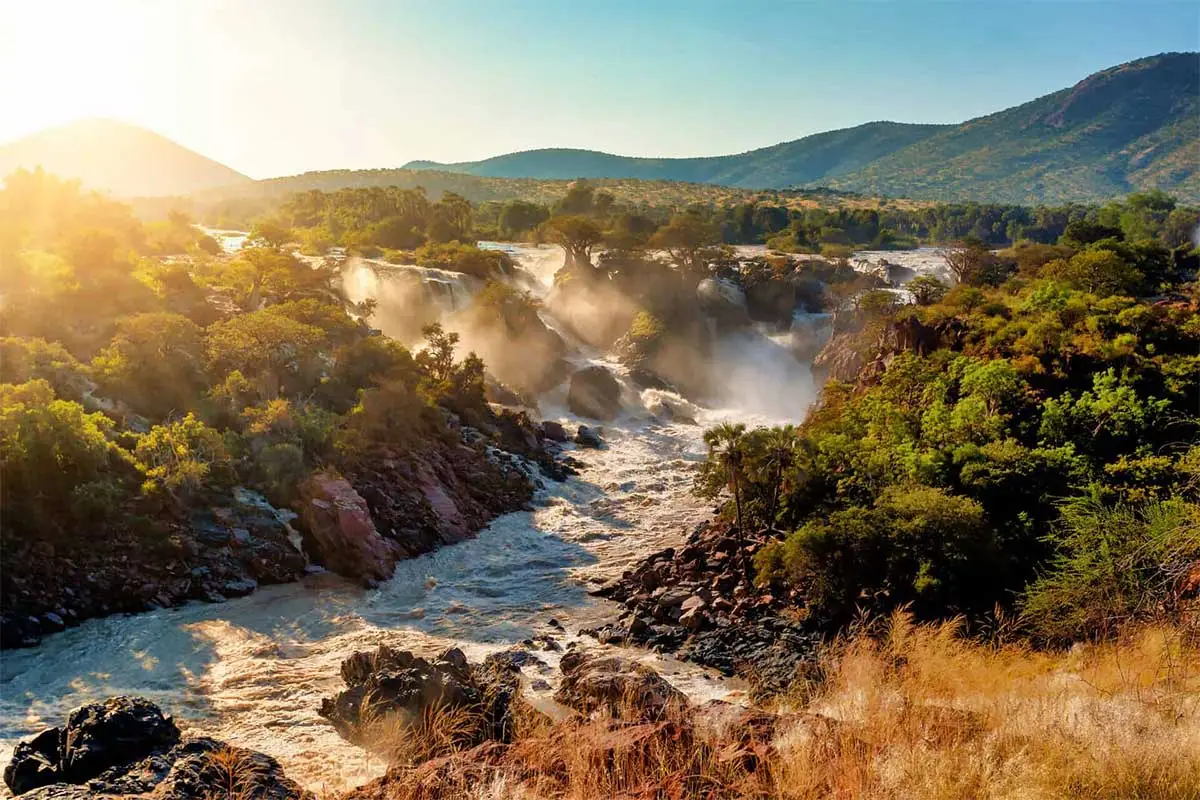
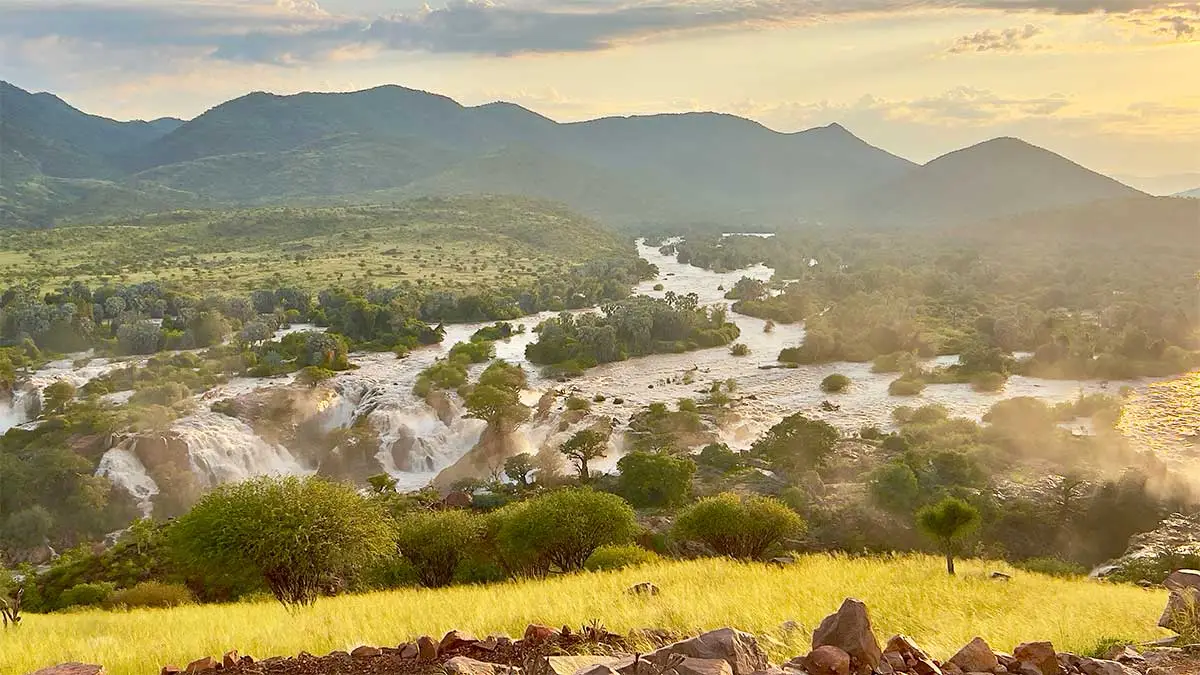
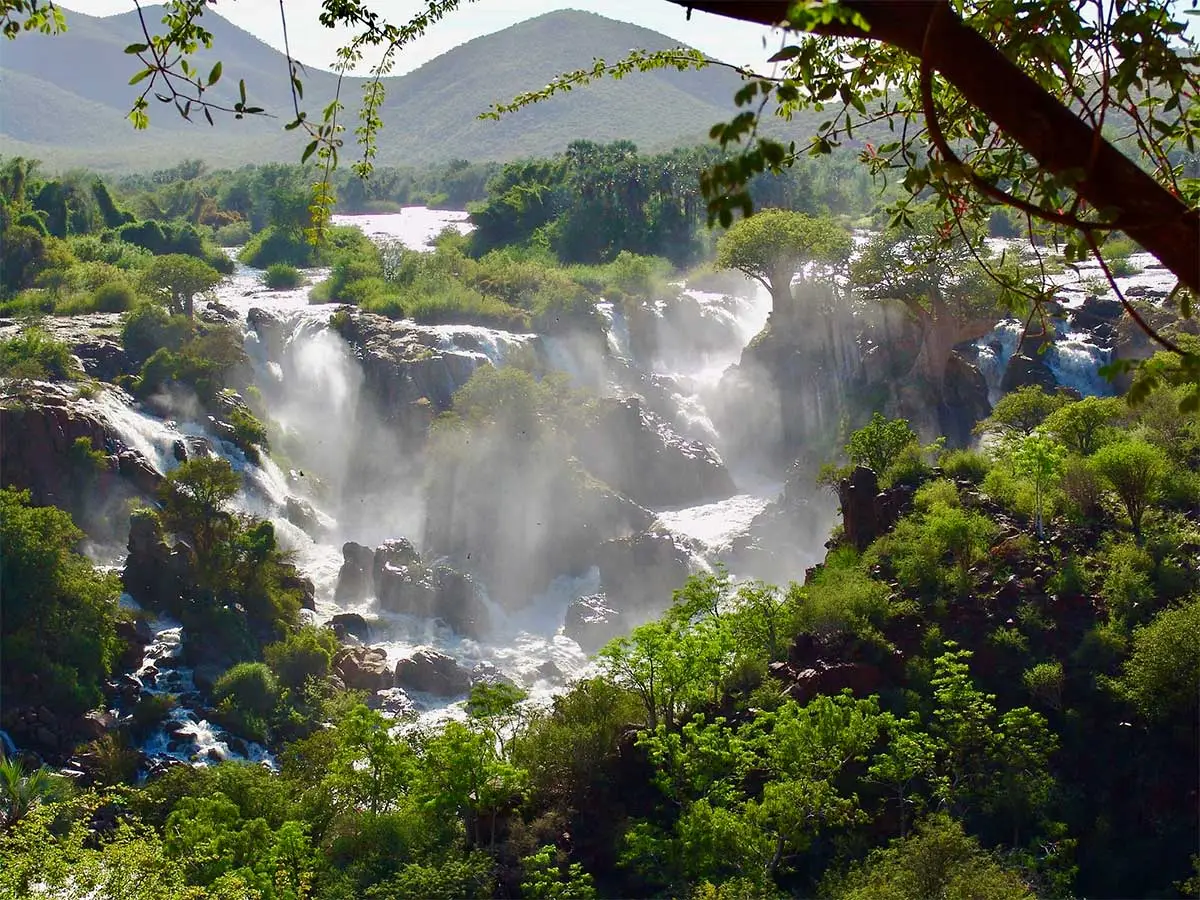
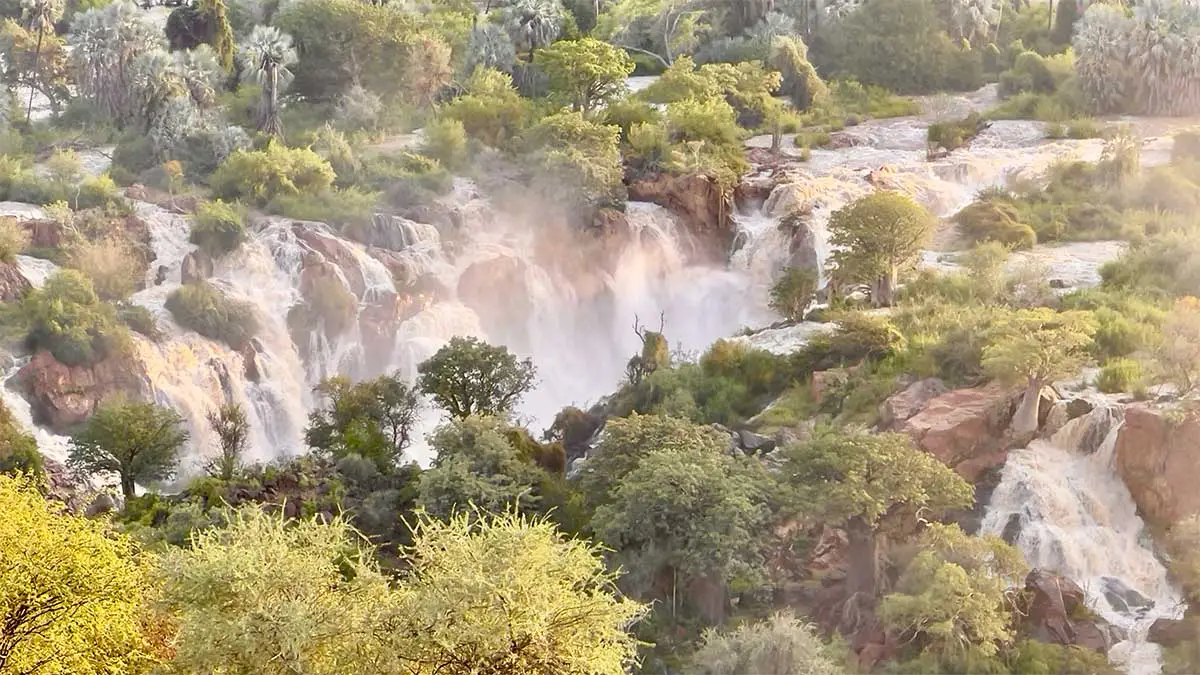
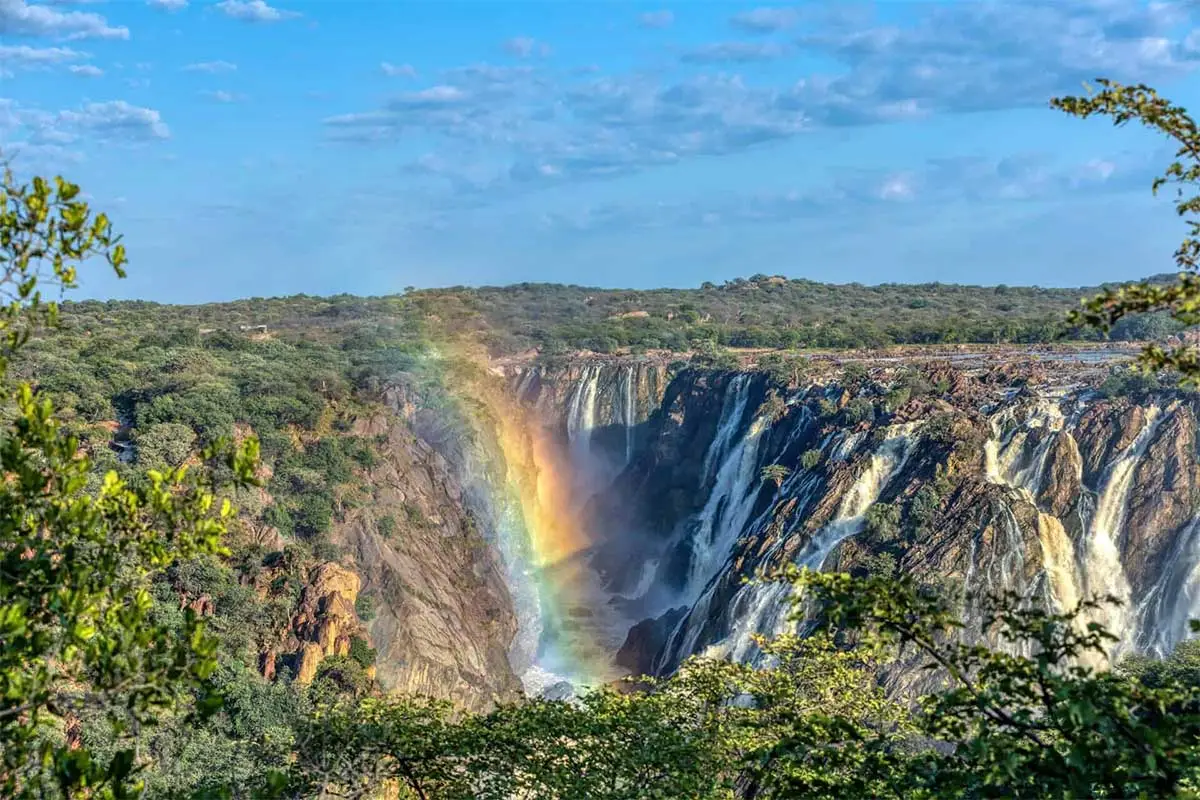
Just 800 meters from Epupa Camp, Epupa Falls is a must-see. The falls stretch for 1.5 kilometers, dropping nearly 40 meters in a series of beautiful cascades. The name “Epupa” means “foam” or “falling water” in the local language, and once you see the white mist rising from the red rocks, you’ll understand why.
The Bradt Travel Guide puts it perfectly:
“Epupa Falls need not be compared to Victoria Falls; they are all the more beautiful for occurring in such an arid region.”
Sunset is the best time to visit – when the light hits the spray and surrounding cliffs just right, it’s pure magic.
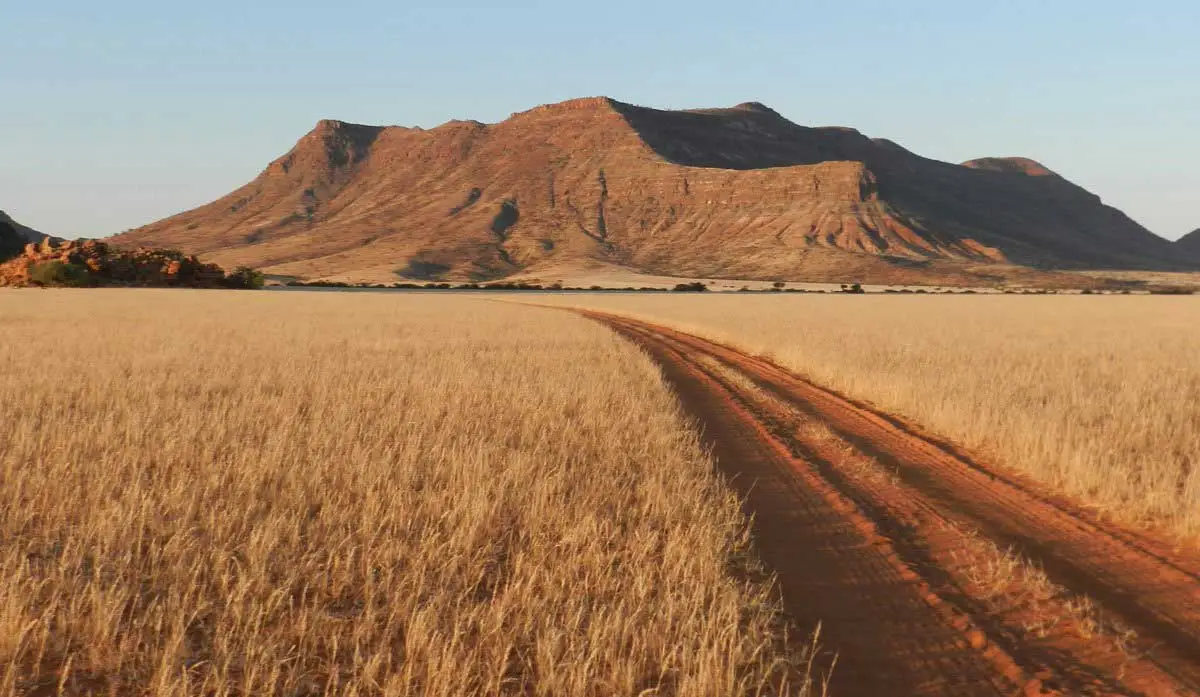
Kaokoland is one of Southern Africa’s last wilderness areas. With towering mountain ranges, dry riverbeds, and endless open spaces, it’s a landscape that seems untouched by time. It’s quiet, vast, remote and incredibly peaceful.
This is a place of contrasts – soft colours and deep shadows in the morning and evening, harsh sunlight at midday, and a landscape that seems empty at first glance… until you start to notice the details. A bird call here, a lizard there, a ripple in the sand. It’s as if the land itself is alive, slowly breathing.
There’s no better way to describe Kaokoland than to experience it for yourself.
Kaokoland is part of the Kunene Region and has the lowest population density in Namibia. The average is estimated as one person per two square kilometers.